Transportation
The framework for an effective transportation network currently exists within Spanish Lake, and it can be improved to enhance safety and accessibility for all users as the community grows.
All data sources can be found in the full report.

Key Takeaways
A solid transportation and mobility foundation exists, but safety, environmental factors, and funding remain key challenges.
Sidewalks, bike routes, and trails have significant gaps that limit safe access and connections.
Public transit is underused due to limited routes and poor pedestrian access.
Opportunities for improvements focus on complete streets, closing gaps, and expanding transit to new destinations.
Roadway Network
Current Traffic Volumes
Average Daily Traffic (ADT) is a quantitative measure of vehicles traversing in both directions along a specific roadway segment throughout a day (24-hours). ADT’s along all the corridors within the study area were based on regional transportation planning models, current traffic volume maps, and archived historic traffic volume maps. The current ADT on Interstate 270 and Missouri Route 367 appears 20% lower compared to previous years, likely due to major projects along the interstate corridor. Once all the bridge replacements and lane additions between Route 367 and the new Chain of Rocks Bridge are completed, the traffic volumes are anticipated to return to peak, pre-pandemic levels prior to 2020.
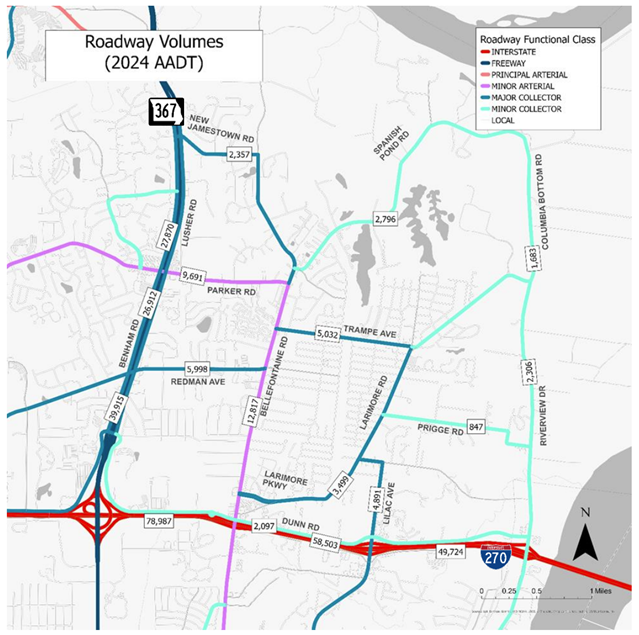
Bellefontaine Road (south of Parker Road intersection) and Parker Road are the highest volume roadways within Spanish Lake, at about 13,000 and 10,000 ADT, respectively, providing access to numerous residential neighborhoods and commercial retail centers.
Traffic Data from the East-West Gateway Council of Governments suggest modest growth to existing traffic volumes, generally less than one percent per year, along the collector and arterial streets within the Spanish Lake study area. However, the growth rates can fluctuate based on planned and future developments.
Exhibit 2 graphically depicts the transportation network ADT’s throughout the Spanish Lake area.
Active Transportation
Walkability and Sidewalk Facilities
To create a pedestrian-friendly community and incentivize walking to one’s destination,
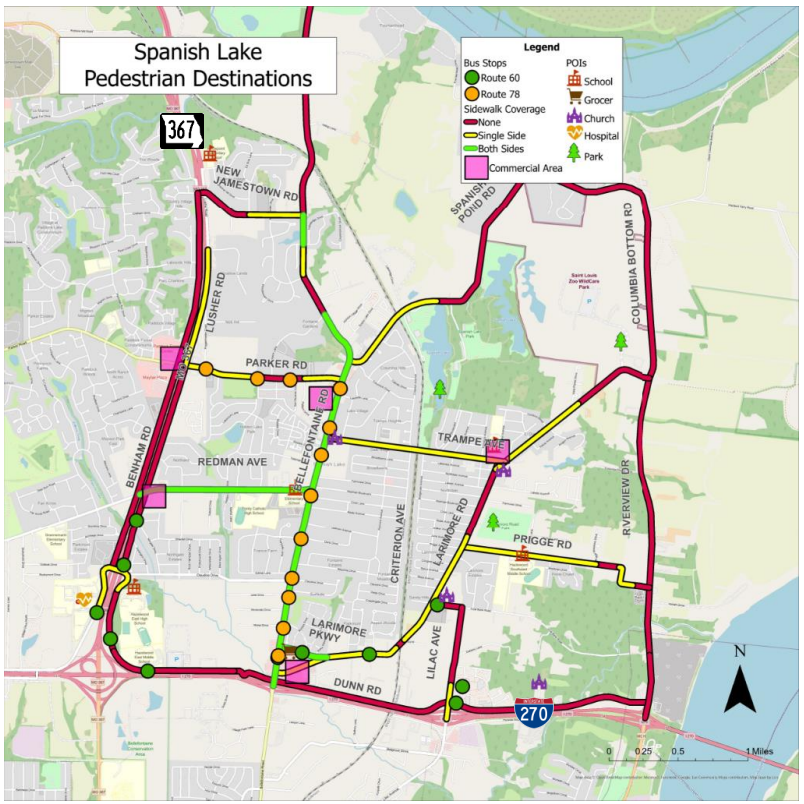
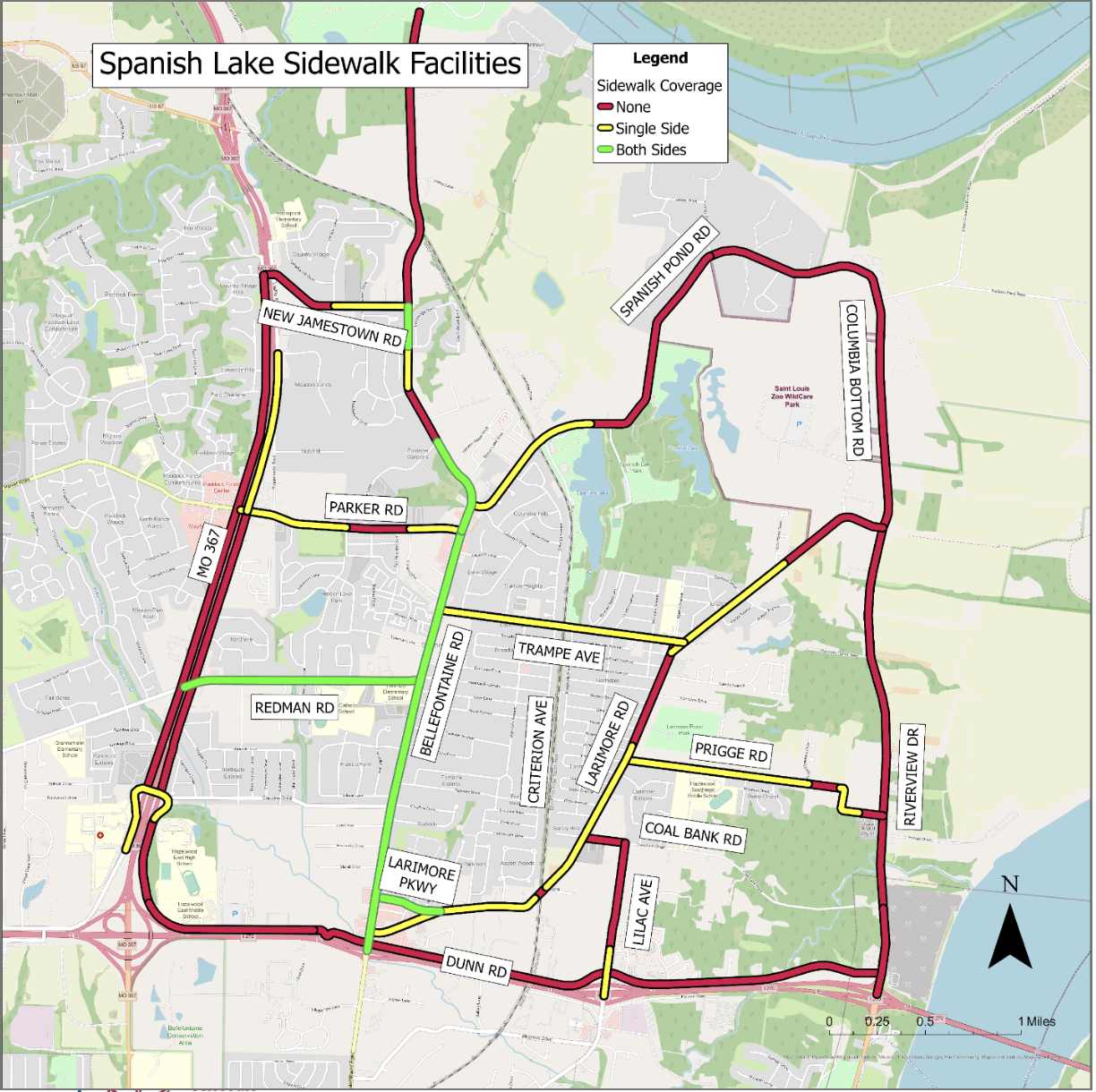
having a complete network of pedestrian infrastructure is crucial. The map shown below identifies where there is pedestrian infrastructure in the sidewalk network.
There is generally a lack of continuity in the sidewalk system, as
well as crucial gaps connecting WildCare Park to the town center and to residential areas.
Regional and Multi-Use Paths
Multi-use trails and paths are typically characterized as a paved or unpaved facility for non-motorized users, generally with a minimum width of eight feet. Some trails can be located parallel to a roadway facility, and some may traverse along a greenway in a meandering alignment.
Spanish Lake Park consists of two public trails around Spanish Lake and Sunfish Lake, providing over three miles of trail network for park visitors.
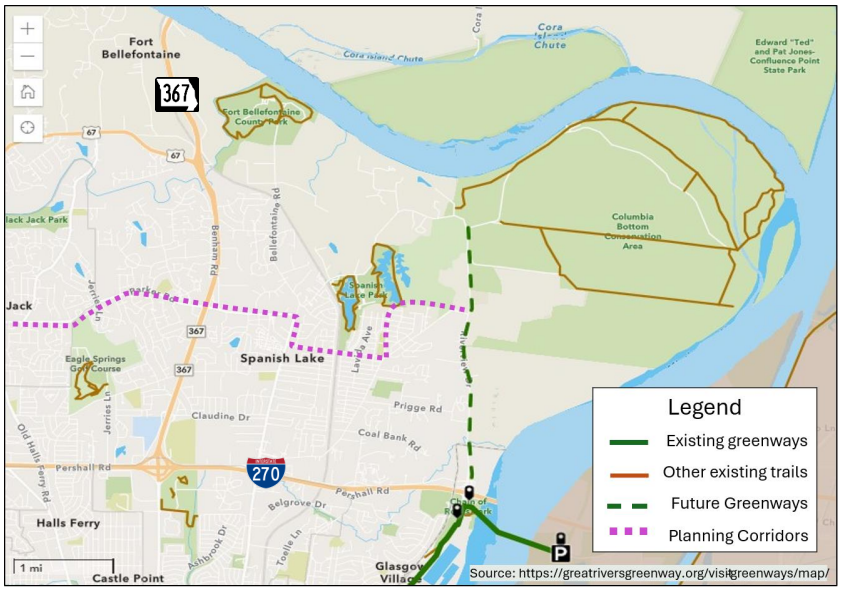
The Great Rivers Greenway District is a public agency in the state of Missouri that works to develop a regional network of greenways, parks, and trails in the St. Louis metropolitan area. The agency engages citizens and community partners to plan, build, and care for the greenways. The Great Rivers Greenway Program has a regional trail system with dozens of multi-use paths connecting existing parks, pathways, destinations, and future trail plans. The program has identified Riverview Road as a “future greenway” plan, as shown in the exhibit above, which would provide a much-needed connection between trail and park destinations such as Spanish Lake Park, Columbia Bottom Conservation Area, as well as the future site of WildCare Park.
Public Transportation and Transit Network
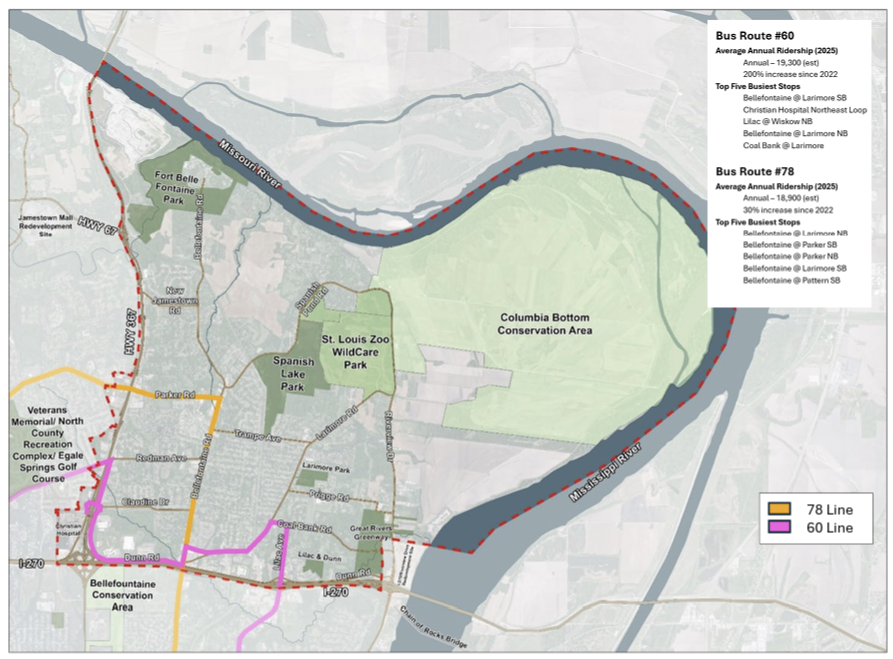
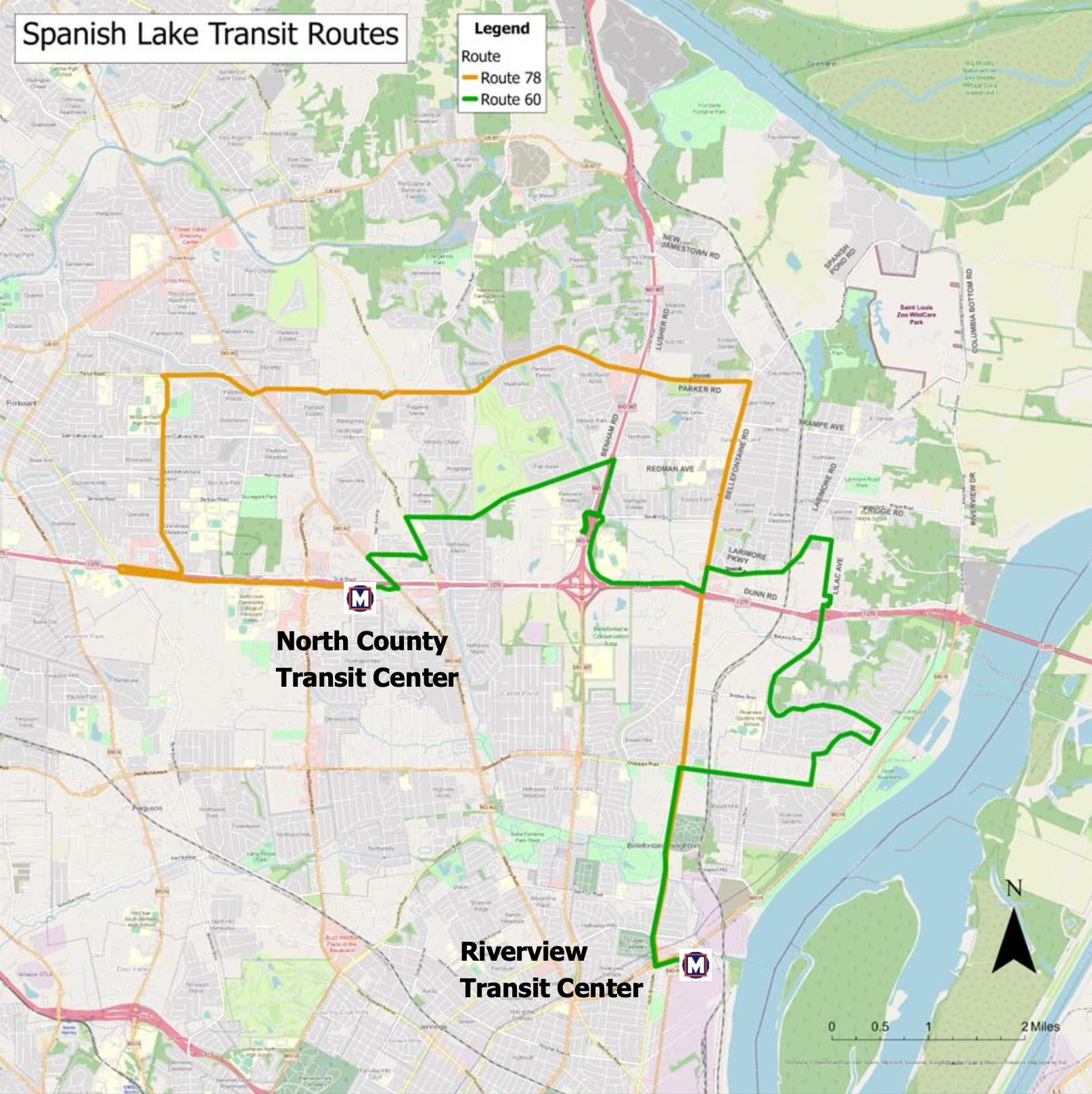
Public transit in St. Louis County and City is operated by Metro St. Louis, including services such as two MetroLink light-rail lines running east to west, 40+ bus lines throughout the County, and on-demand Metro Call-A-Ride shuttles Spanish Lake is served by Route #60 (Shepley-Lilac) and Route #78 (Bellefontaine). Both routes terminate at Riverview Transit Center and North County Transit Center.
These routes provide important mobility options for residents without consistent automobile access, but they also have broader implications for economic mobility, workforce access, and the ability to support local commercial activity along corridors such as Bellefontaine Road. The entire MetroLink Route #60 and #78 are depicted in the map below.
Freight Network and Utilities
BNSF Alignment
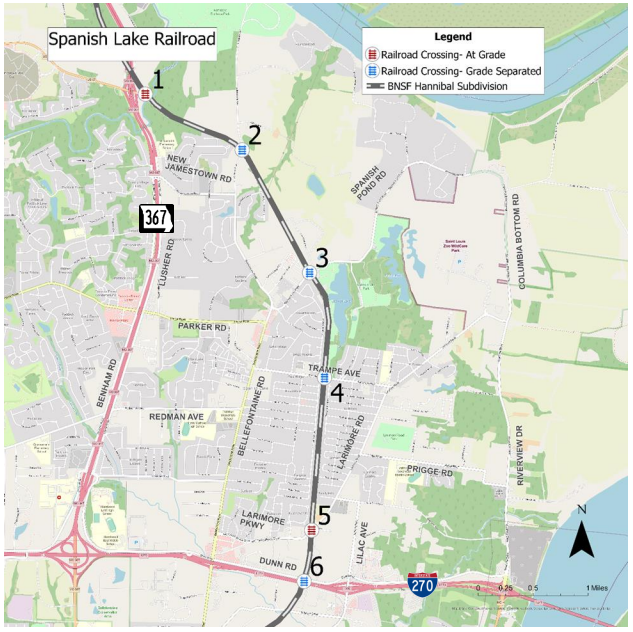
Burlington Northern-Santa Fe (BNSF) Railway operates one of the largest freight railroad networks in North America, with 32,500 miles of track across the western two-thirds of the United States. Although the Hannibal Subdivision track was laid before the Spanish Lake community was built, it divides the community and limits community mobility by restricting access from east to west to the six crossing points listed below. BNSF runs six trains per day, three during the day and three at night.
The rail line transitions from a single track to dual tracks between the Spanish Pond Road and Trampe Avenue crossings. There are six crossings (two at-grade and four grade separated) within the community with various challenges or characteristics, as shown in the accompanying exhibit. None of the at-grade crossings are designated as “Quiet Zones”.
1. Lindbergh Blvd
• At-Grade single track, signalized crossing without gate; extremely low traffic volumes
2. Bellefontaine Road
• Overpass vehicular bridge, single track, limited shoulder room for sidewalk
3. Spanish Pond Road
• Overpass vehicular bridge, single track, recently constructed new sidewalk bridge in good condition
4. Trampe Avenue
• Underpass, dual track, low clearance (<11’-6”) and limited room for pavement expansion; St. Louis County installed speed humps in 2025 in an attempt to slow traffic and provide more awareness of the low vertical clearance; floods frequently with heavy rain events; 23 crashes over the past 10 years, mostly large vehicles
5. Larimore Road
• At- Grade dual track, signalized crossing with gate; poor pavement condition and lack of sidewalk
6. Dunn Road and I-270
Issues
Transportation Network Challenged by Environmental and Connectivity Issues
Spanish Lake's transportation network faces resiliency, connectivity, and safety challenges driven by flooding vulnerability, limited east-west access across the BNSF rail corridor, roadway constraints that restrict large vehicles, and narrow roadways.
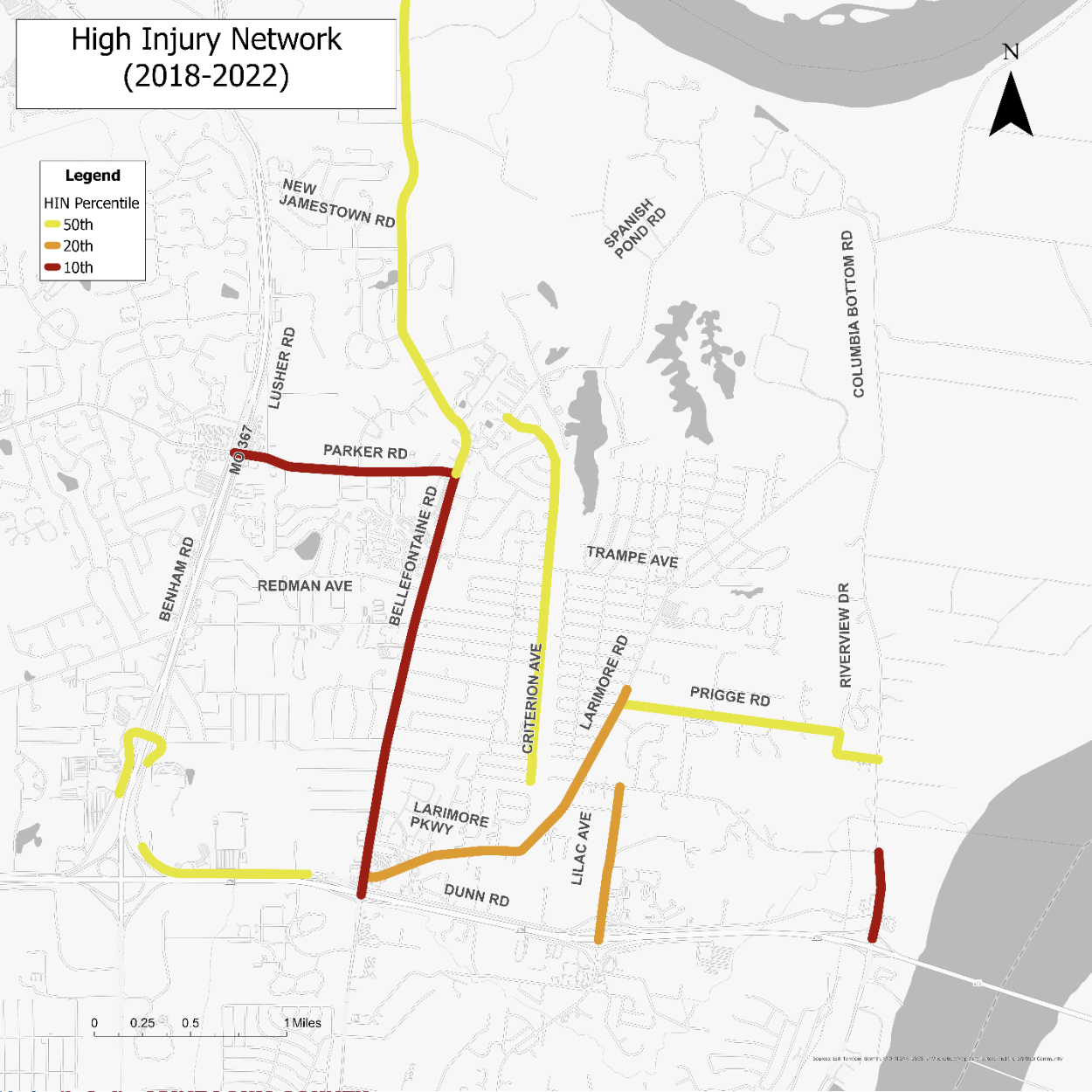
These conditions contribute to elevated crash risk, with Parker Road, Bellefontaine Road, and Riverview Drive ranking among St. Louis County’s highest-injury roadways.
More Trail and Park Connections Needed
Additionally, existing trails are not well-connected, and insufficient right-of-way restricts safe, accessible connections to parks and other amenities.
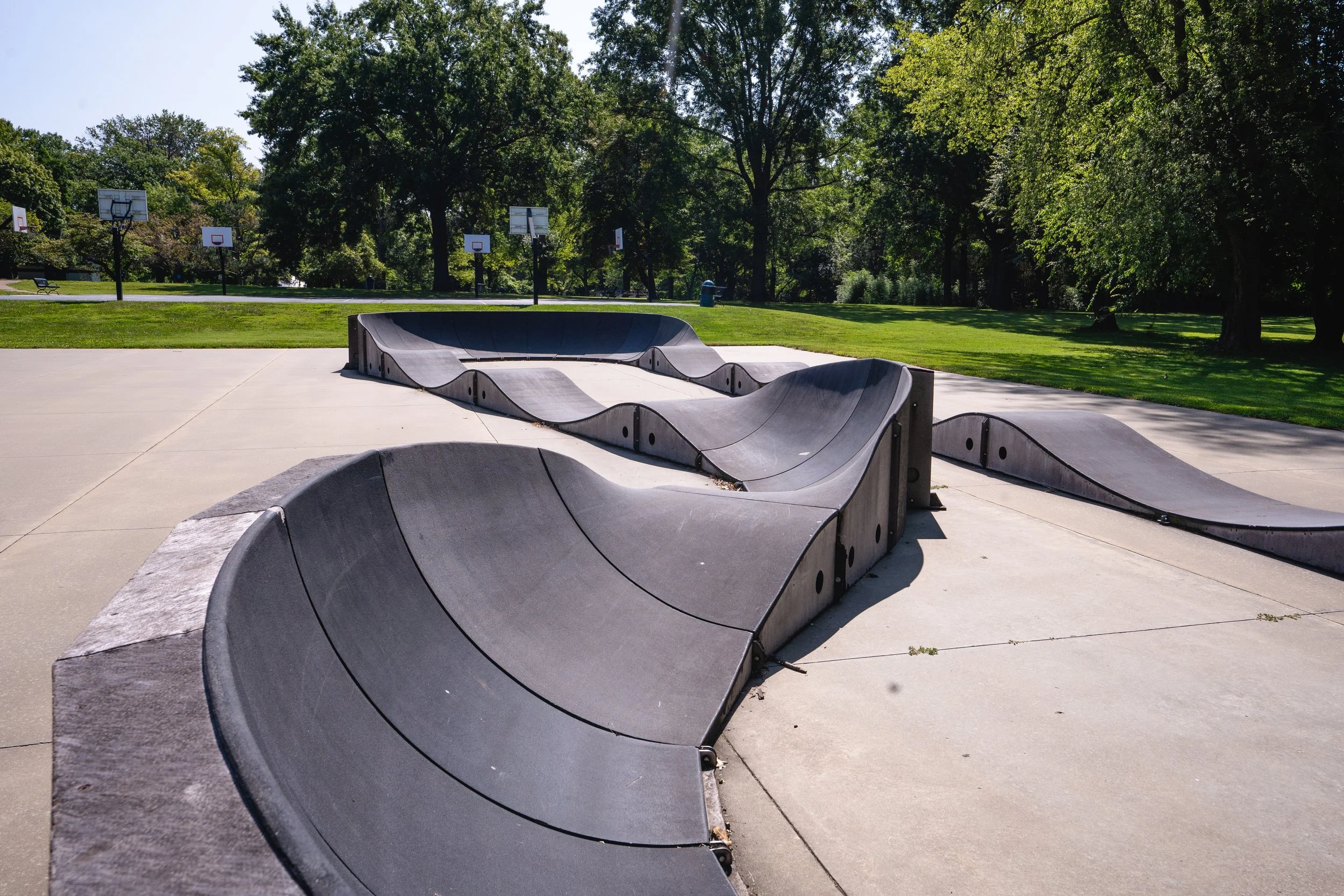
Spanish Lake has limited bicycle infrastructure, with few designated bike facilities, constrained roadway widths that limit reconfiguration for bike trails and other non-car facilities, and a mismatch between key destinations and bike-friendly routes.
Mobility Limited by Sidewalk Gaps and ADA Compliance
Sidewalk infrastructure in Spanish Lake is often substandard or missing, with ADA-compliance issues, poor connectivity, and physical constraints that limit the community's ability to close key sidewalk gaps.
Public Transit Gaps Limit Use
Public transit service in Spanish Lake is constrained by limited route coverage, poor transit shelter infrastructure, low service frequency, and substandard pedestrian access. These factors have resulted in lower ridership despite a large share of residents living within walking distance of transit.
Increased Transportation Funding Needed
Transportation infrastructure funding remains a challenge for St. Louis County. Current maintenance and preservation needs exceed available funding, and improvements will require additional funding.
Opportunities
Strengthen Network Resiliency and Safety
There are several key opportunities to improve network resiliency and safety throughout Spanish Lake, most notably by establishing multiple routes that can efficiently and safely move people through the community, better defining truck access to WildCare Park, and ensuring that upcoming network improvements benefit all users, from pedestrians to drivers and cyclists.
Strengthen Walkable Corridors and Close Sidewalk Gaps
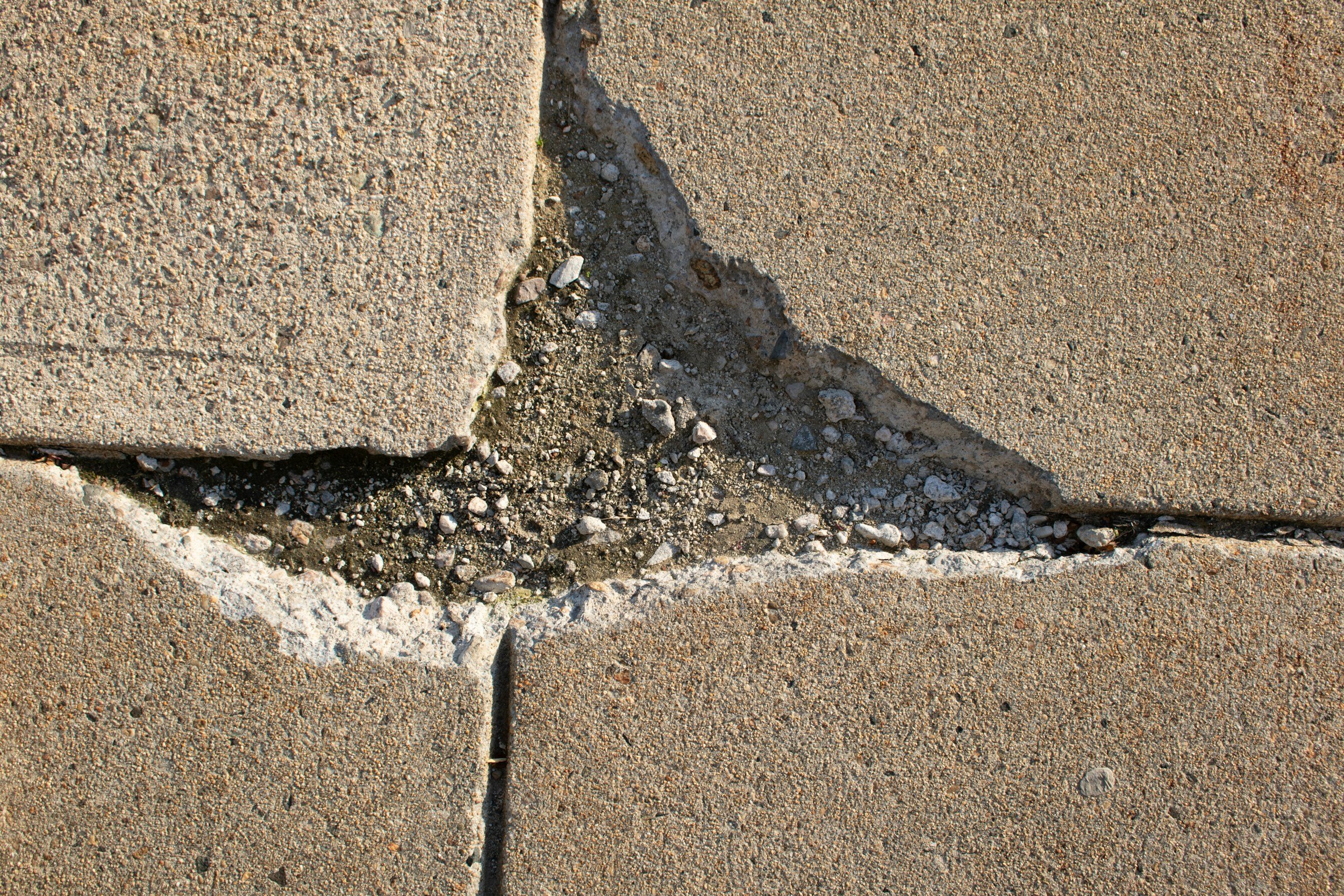
Enhancements should focus on strengthening corridors as walkable destinations where it makes sense, improving access to transit, and closing sidewalk gaps by building on the planned East-West Gateway Council of Governments Great Streets initiative and access to existing and planned Greenways.
Expand Active Mobility and Transportation Access
Improved active transportation can expand access to parks and commercial areas, encourage walking and biking for healthier lifestyles, support local investment, and leverage partnerships with regional agencies to advance implementation.
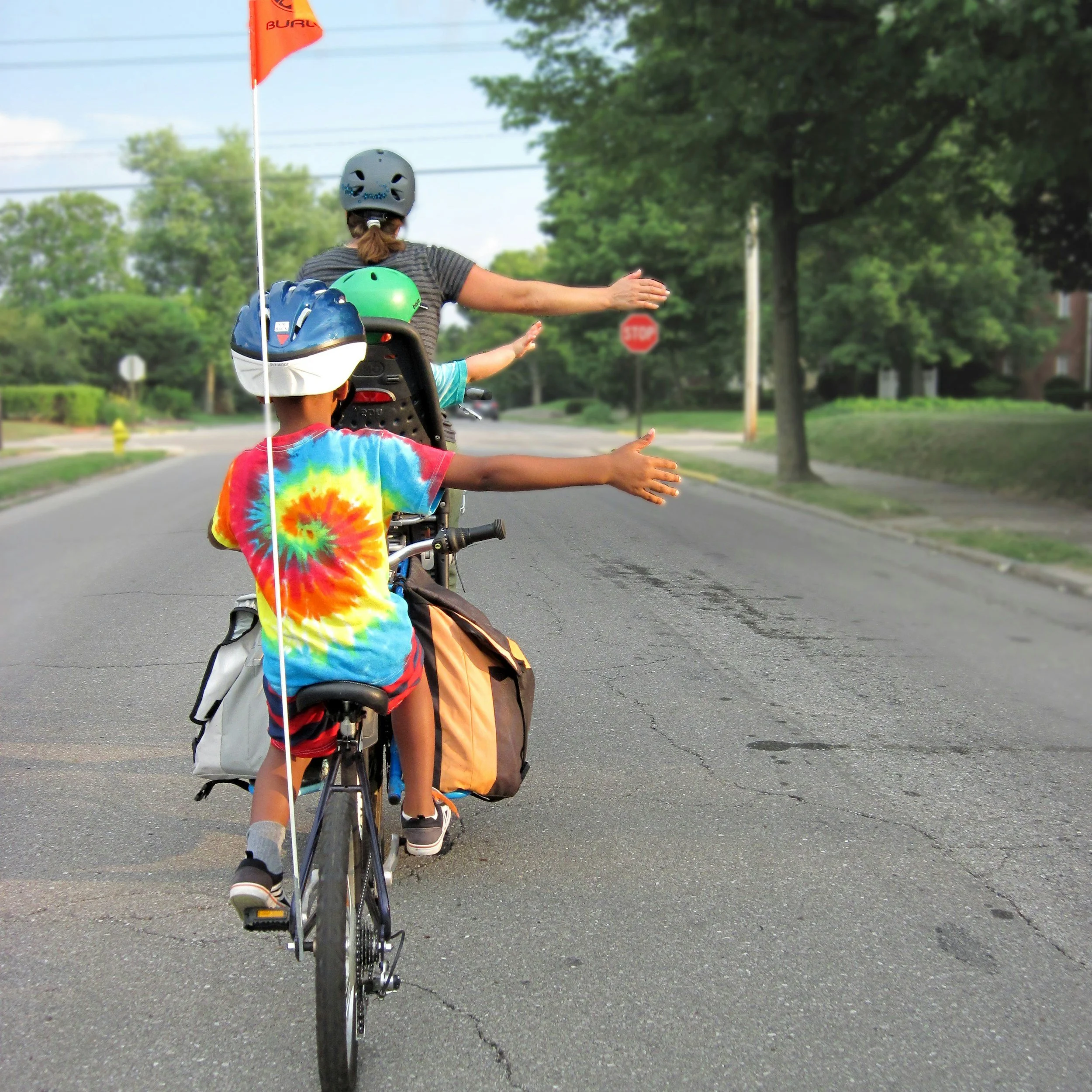
Bicycle and active transportation opportunities center on converting wide, low-volume corridors into complete streets that are safe for bicyclists and pedestrians, while improving connections between existing trails and future greenways.
Improve Transit Service
Improving transit service and facilities, and extending routes to WildCare Park and other commercial centers, would increase ridership and encourage public transit use for short trips within Spanish Lake.