Public Health and Quality of Life Recommendations
Key Takeaways
—
Key Takeaways —
Spanish Lake faces interconnected public health challenges related to transportation, housing, food access, healthcare access, and public safety.
Transportation improvements, park activation, housing investment, food access expansion, healthcare access enhancements, and public safety upgrades are central to improving health outcomes.
The southernmost census tracts in Spanish Lake show the highest levels of need and should be prioritized for coordinated investment to maximize impact.
The report outlines six place‑based strategies designed to improve public health and quality of life by addressing root causes across transportation, housing, food access, healthcare, parks, and public safety.
These strategies align with the sustainability and equity goals of STLCO 2050 by supporting connected, accessible, and resilient neighborhoods.
Public Health Recommendations
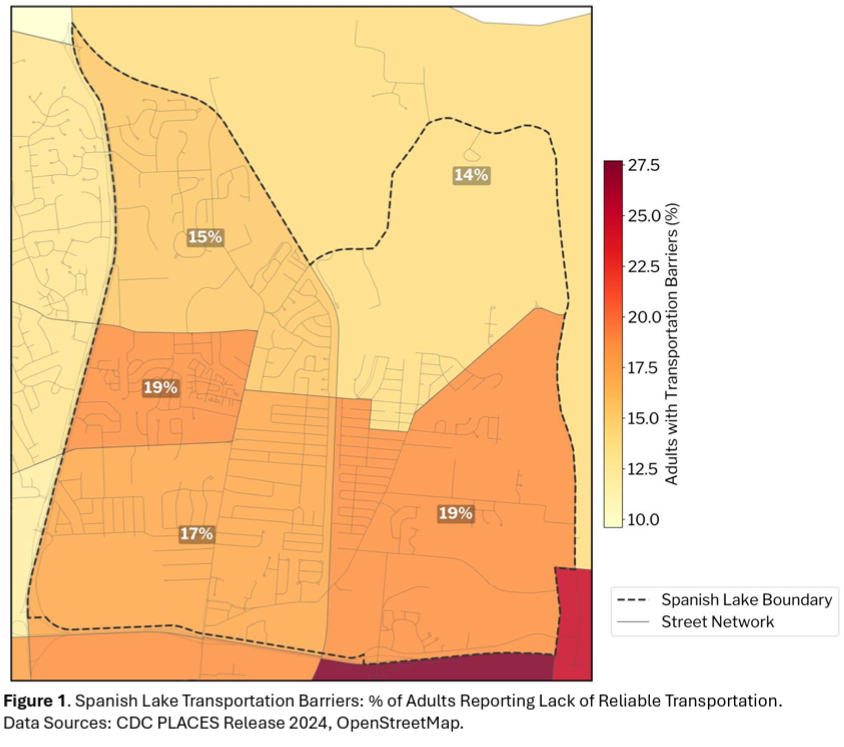
Increase Bus Service Frequency and Develop Last-mile Options
Increasing bus frequency on Routes 60 and 78, along with creating microtransit and last‑mile solutions, will significantly reduce transportation insecurity for Spanish Lake residents. More reliable transit enables easier access to employment, healthcare, education, grocery stores, and other essential services. Pairing improved bus schedules with safer pedestrian and cycling connections will allow residents to reach transit stops without long, unsafe walks.
These improvements also contribute to public health by integrating physical activity into daily routines and supporting climate resilience through reduced car dependence. Prioritizing neighborhoods outside a 10‑minute walk of bus stops will target the areas facing the greatest mobility barriers.
Activate Parks and Natural Assets for Youth and Community Recreation
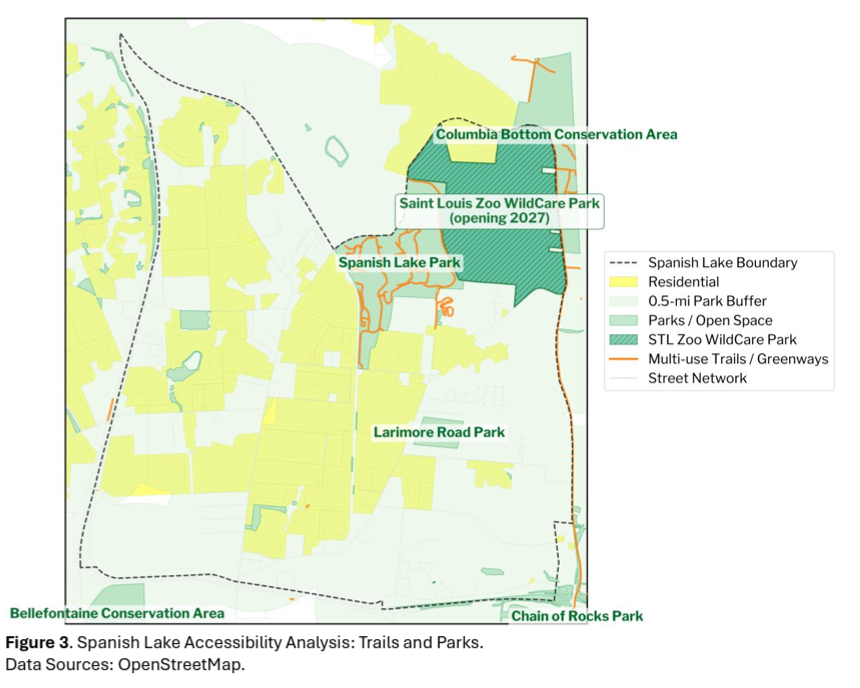
Spanish Lake’s proximity to Spanish Lake Park and Columbia Bottom Conservation Area creates an outstanding opportunity to expand outdoor recreation. Investments in youth programming, trail connectivity, mountain biking, BMX, and cycling infrastructure can activate these natural assets and support improved physical and mental health for all residents.
By strengthening connections to parks and trails, Spanish Lake can promote stress reduction, social connection, physical activity, and nature‑based health benefits. These enhancements should be strategically located within walking distance of residential neighborhoods to maximize accessibility and community participation.
Increase Public Investment in Housing
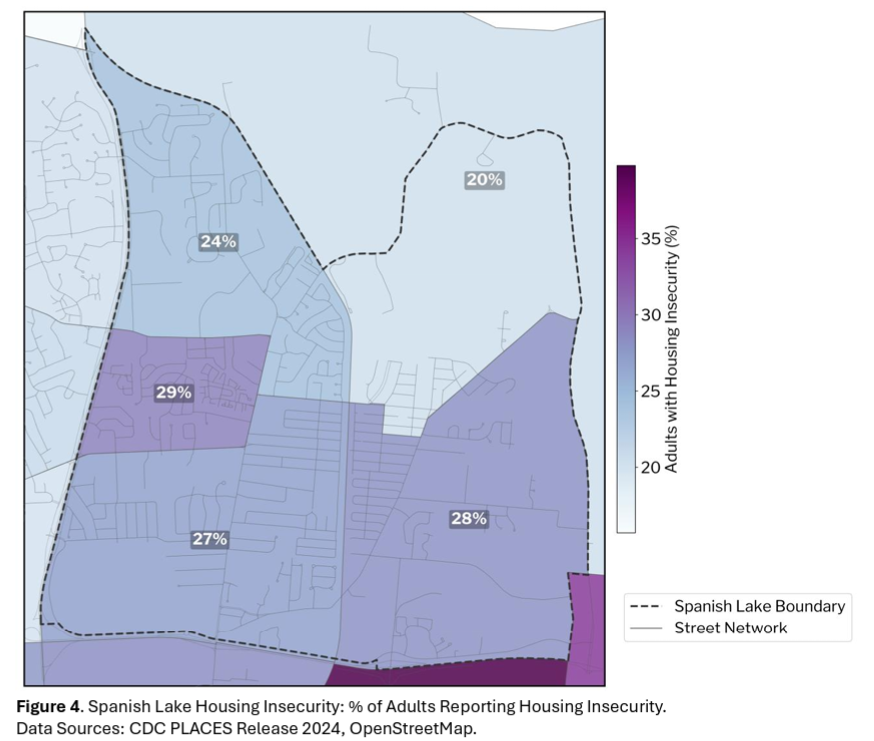
Expanding investment in affordable housing, rental assistance, and home repair programs will stabilize living conditions and reduce the financial burden on residents experiencing housing insecurity. Stable housing is foundational for health because it improves safety, reduces stress, prevents displacement, and enables better management of chronic conditions.
Targeted home repair funds can address hazards such as mold, pests, or poor ventilation that contribute to respiratory and chronic health issues. Focusing housing investments in the southernmost census tracts—where need is highest—will create the greatest community impact and support long‑term economic mobility.
Expand Access to Affordable, Healthy Food and Strengthen Community Agriculture
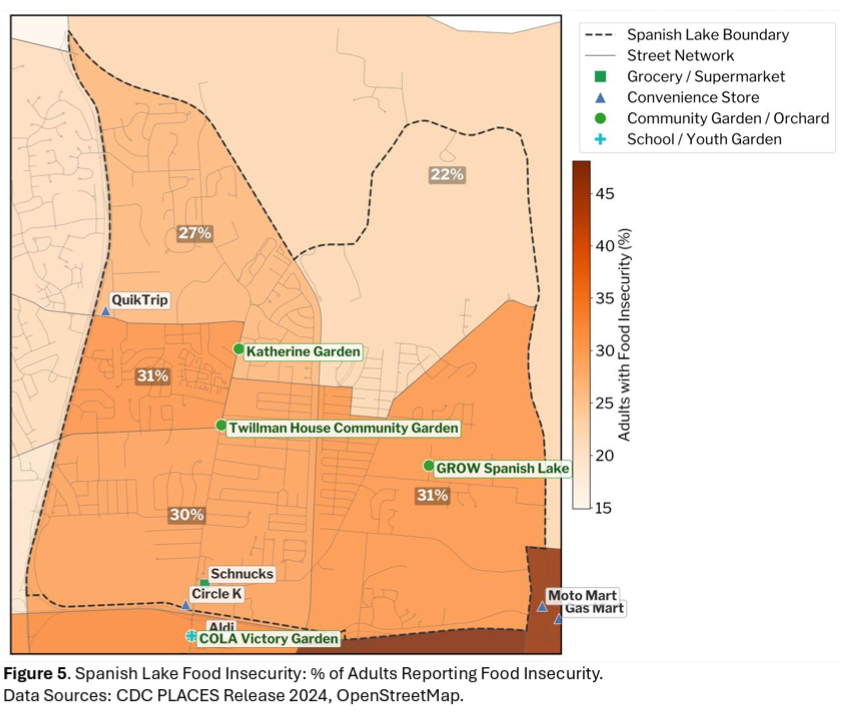
Improving access to affordable and nutritious food is essential for addressing diet‑related chronic diseases such as hypertension, diabetes, and cardiovascular disease. While Spanish Lake has major grocery stores and growing urban agriculture assets, reliable access requires safe pedestrian routes, dependable transit, and affordability.
Investments should support community gardens, orchards, and local agriculture initiatives that build food autonomy and strengthen neighborhood resilience. Pairing these community‑led efforts with better transit and walkability to grocery stores will reduce food insecurity and improve long‑term health outcomes.
Enhance Local Healthcare Access
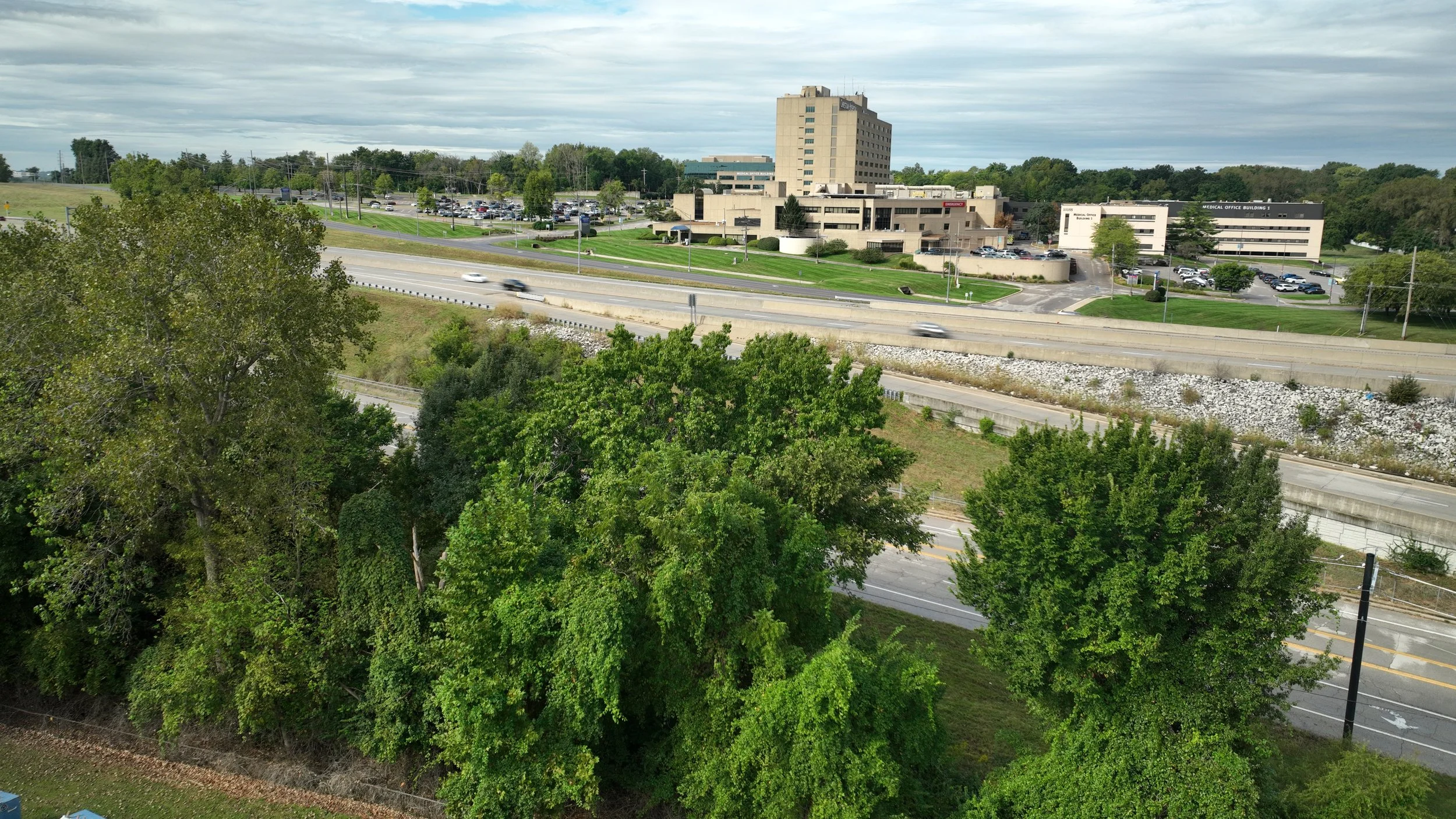
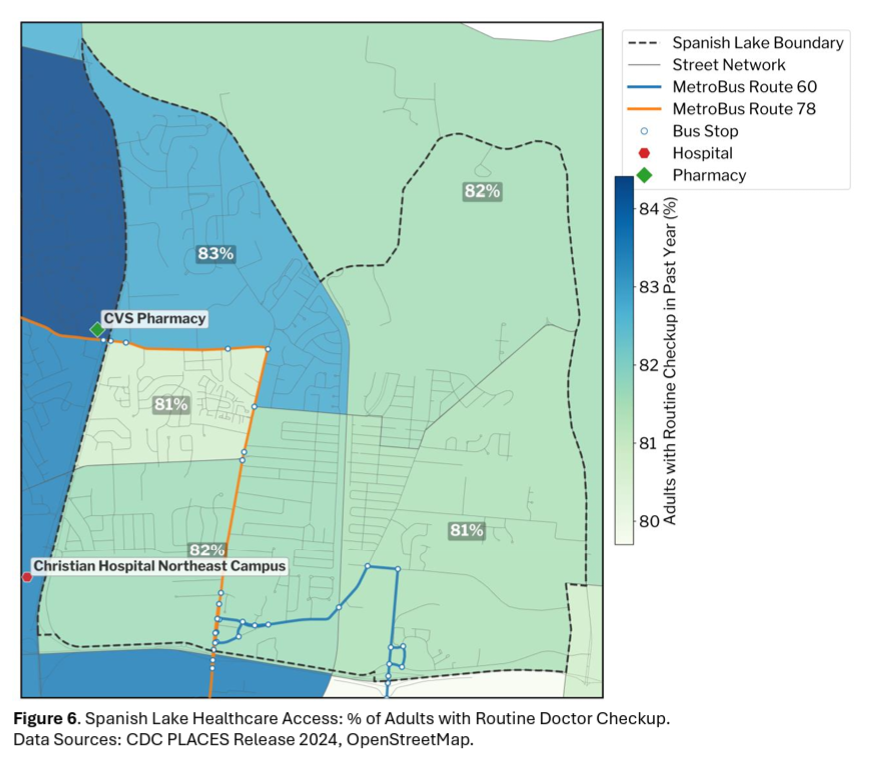
Spanish Lake lacks local primary care and social service facilities outside Christian Hospital Northeast and a CVS Pharmacy. Improving bus frequency, microtransit connectivity, and safer last‑mile pedestrian routes will allow residents—especially those without cars—to reliably reach preventive and routine care. Better access to care reduces missed appointments and enables residents to manage chronic and behavioral health needs before they become more serious.
Healthcare access should be planned in tandem with expanded community health partnerships, pop‑up clinics, and mobile health services that reach residents in areas with limited medical infrastructure.
Expand Emergency Facilities and Public Safety Infrastructure
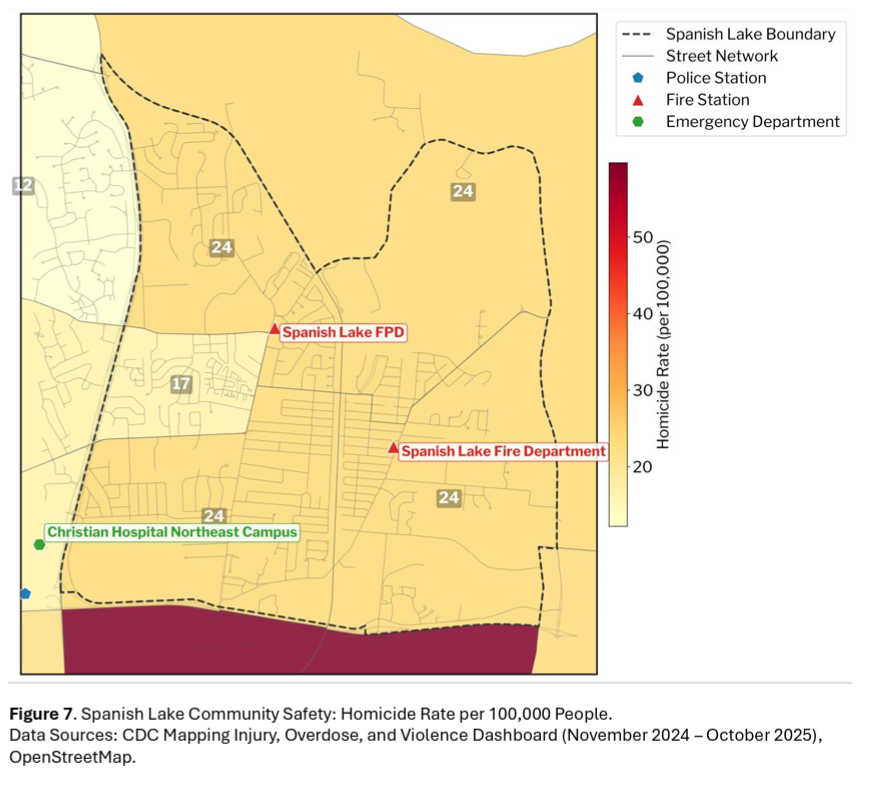
Spanish Lake experiences higher homicide rates than nearby peer communities, indicating the need for expanded public safety resources. Investments should focus on emergency medical facilities, first‑responder coverage, improved street lighting, and evidence‑based violence intervention programs that address root causes and support long‑term community resilience.
Strengthening public safety infrastructure improves response times, enhances residents’ sense of security, and creates safer routes to transit, schools, healthcare, and grocery stores. Targeted investments in high‑need census tracts will build stable foundations for health and mobility across the community.