Land Use
By leveraging Spanish Lake’s natural assets and land potential, the community can build a strong foundation for commercial, residential, and tourism growth.

Key Takeaways
Natural Landscape
Parks, conservation areas, farmland, and open space dominate the land cover, creating strong environmental and recreational assets.
Community Form
The Housing stock continues to age, single-family home vacancy is significant and there is a high rate of investor ownership.
The street infrastructure is aging and many roads have high crash concentrations—especially along Parker and Bellefontaine Roads.
Public transit coverage is limited and poorly connected to pedestrian infrastructure.
Retail leakage is substantial because residents routinely leave the community for everyday goods and services.
Land Use Regulations
Zoning is primarily low-density residential, parks/open space, and farmland. Commercial and industrial areas are concentrated along major corridors.
Karst features and floodplain constrain development options but also provide conservation opportunities.
Spanish Lake includes a diverse mix of suburban subdivisions, rural/agricultural areas, multifamily districts, and corridor commercial zones.
Future placetypes emphasize context-sensitive development, enhanced mixed-use nodes, and recreational/eco-tourism assets.
Susceptibility to Change
Areas where reinvestment and transformation could likely occur are commercial corridors along highways I‑270 and 367, multifamily properties, and smaller centralized community corridors.
Established subdivisions and environmentally sensitive zones are less likely to experience change.
Outdoor Recreation & Tourism Opportunities
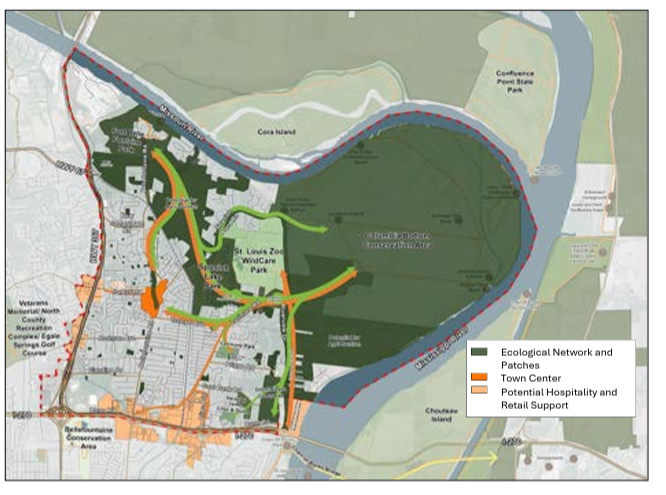
Spanish Lake has the foundation to become a regional gateway for eco-tourism and outdoor recreation due to its proximity to major parks, greenways, and the St. Louis Zoo WildCare Park.
Strong potential exists for agri-tourism, hospitality, trail networks, and heritage tourism connected to regional historic assets.
Historical Context
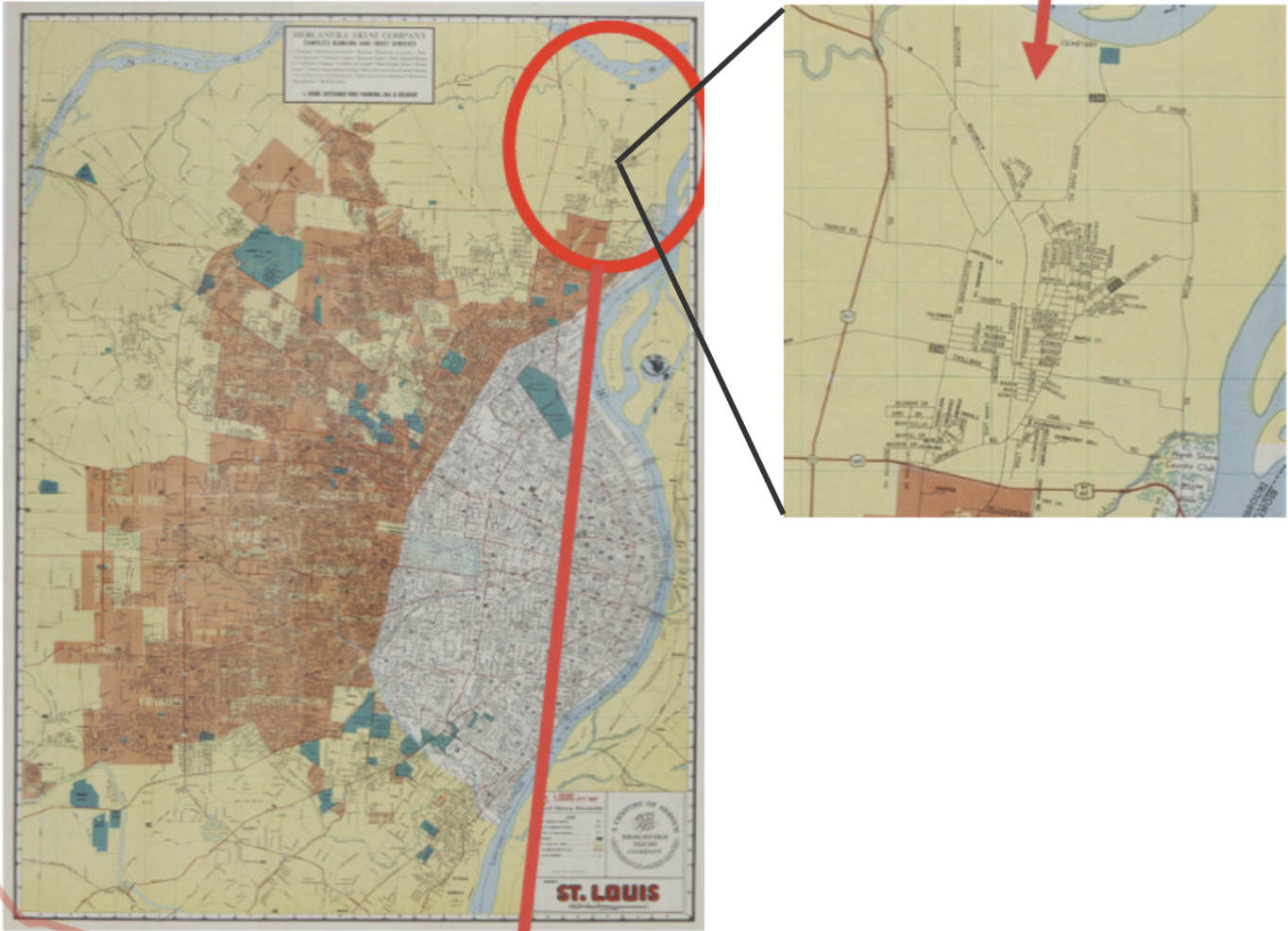
Local tradition says Spanish Lake takes its name from the nearby pond which served as a recreation area for the Spanish soldiers garrisoned at the Spanish fort Don Carlos founded in 1764.
In 1928 William Heckman bought Spanish Pond for the Eldorado subdivision. At that time the roads were still stone. The name was changed from Spanish Pond to Spanish Lake at that time for promotional commercial purposes.
Throughout the 1950s and 1960s, Spanish Lake underwent a massive transformation from a rural farming retreat into an unincorporated suburban bedroom community. Thousands of tract-style homes, apartments, and commercial areas were built.
Community Form
Spanish Lake’s community form reflects a distinctive blend of rural and suburban character shaped by expansive open space, and long-established neighborhoods. This pattern supports a strong environmental identity but also creates physical separations between neighborhoods, commercial areas, and community amenities.
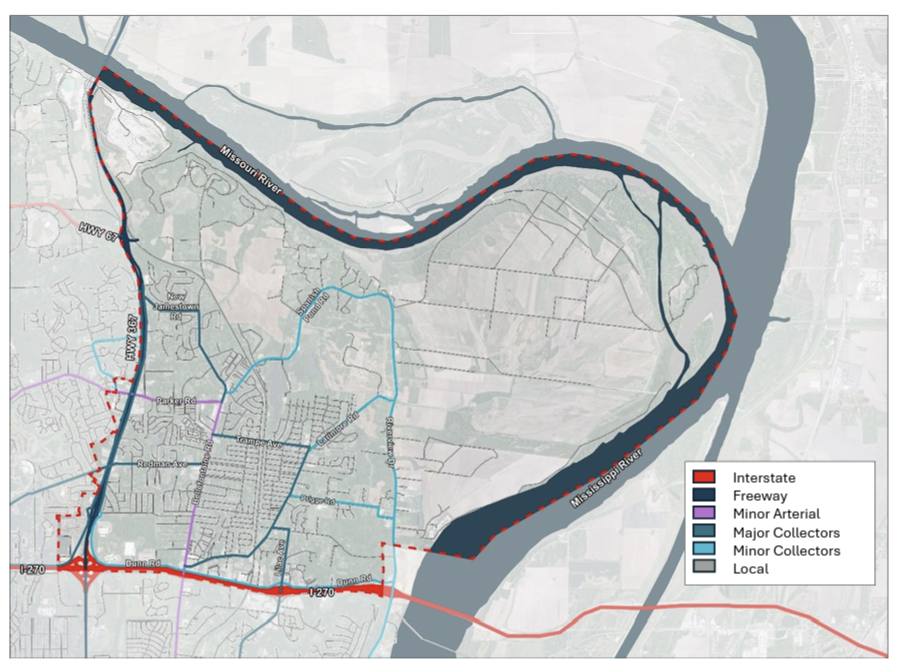
Aging Streets Limiting Mobility
The transportation network is predominantly auto‑oriented, with strained sidewalk connectivity and aging roadway infrastructure contributing to high crash rates along key corridors. Sidewalk gaps, non‑ADA‑compliant segments, and limited access to public transit restrict safe multimodal travel and reduce walkability throughout the area.
Declining Homeownership Fueling Vacancies and Out-of-State Investment
Housing is characterized largely by older single‑family homes, many built between 1970 and the late 1990s. The area experiences elevated vacancy, declining homeownership, and high levels of investor ownership, while multifamily complexes account for a large share of occupied units and are often associated with high eviction rates and market instability.
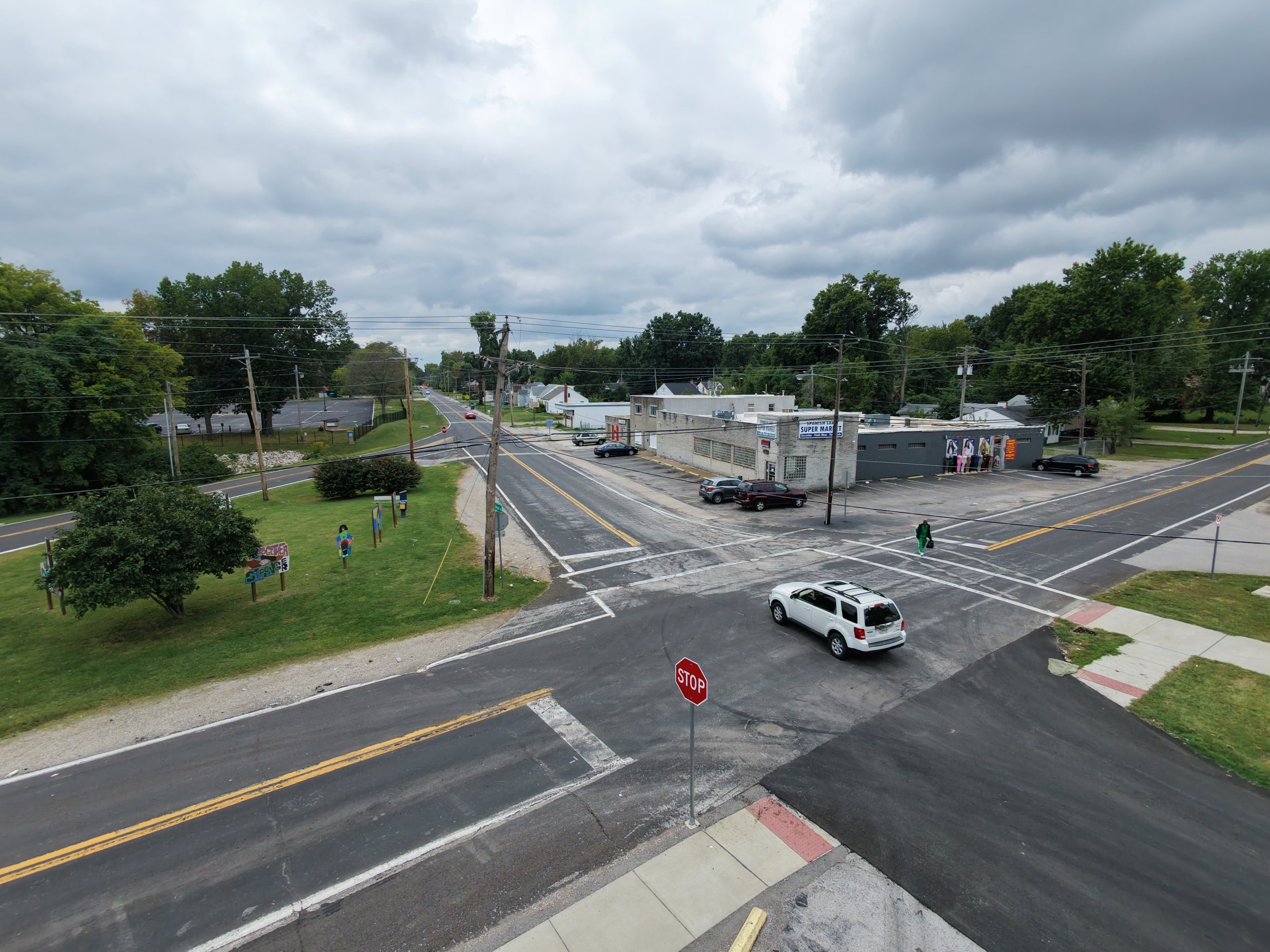
Lack of Commercial Districts and Corridors Limiting Economic Growth
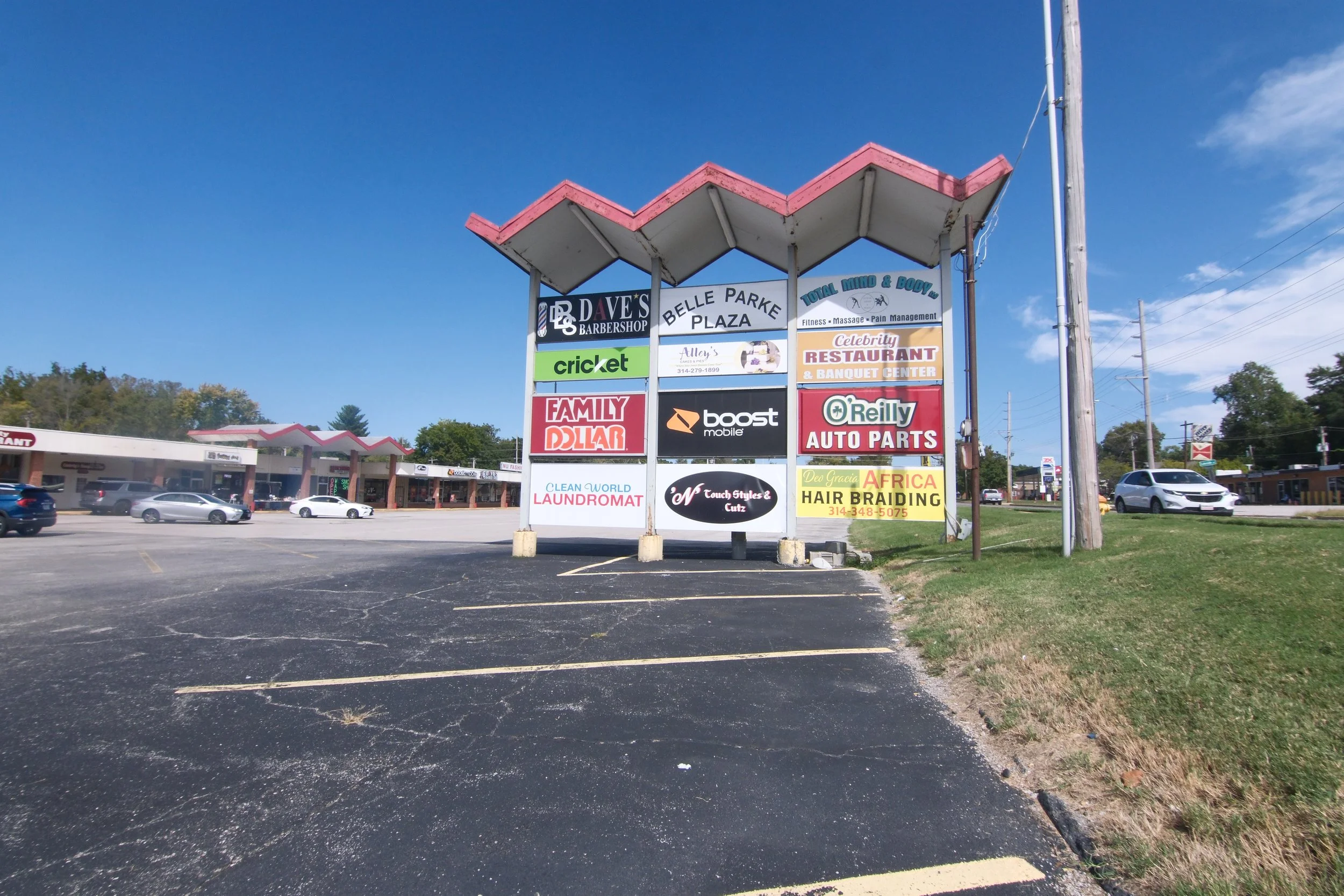
Commercial areas are marked by aging retail centers, high vacancy, and significant retail leakage, with many residents traveling to adjacent communities for everyday goods and services.
Disjointed Civic and Public Facilities
While Spanish Lake benefits from core public services—including schools, police and fire protection, recreation facilities, and parks—these amenities are not evenly distributed across neighborhoods. This uneven pattern limits access to daily needs, reinforcing car dependence and highlighting the need to strengthen community services.
Natural Landscape
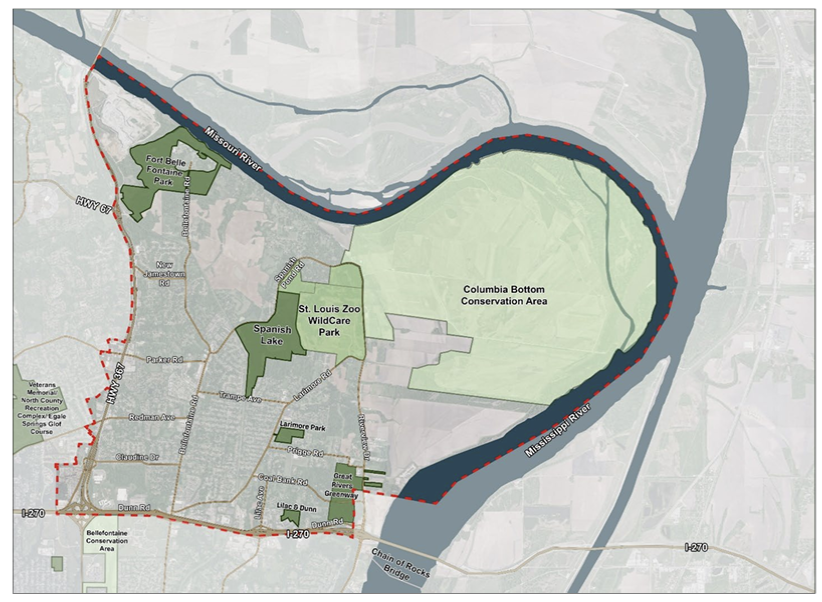
Spanish Lake’s natural landscape is shaped by a strong network of parks, conservation areas, greenways, and active farmland. Collectively these landscapes create the community’s rural–suburban character and provide significant ecological, recreational, and educational value. These assets form an interconnected natural system supporting habitats, recreation, and nature‑based tourism.
Existing Parks Bolster Eco-Tourism Potential
Spanish Lake contains several local and regionally significant parks that anchor recreation and community identity.
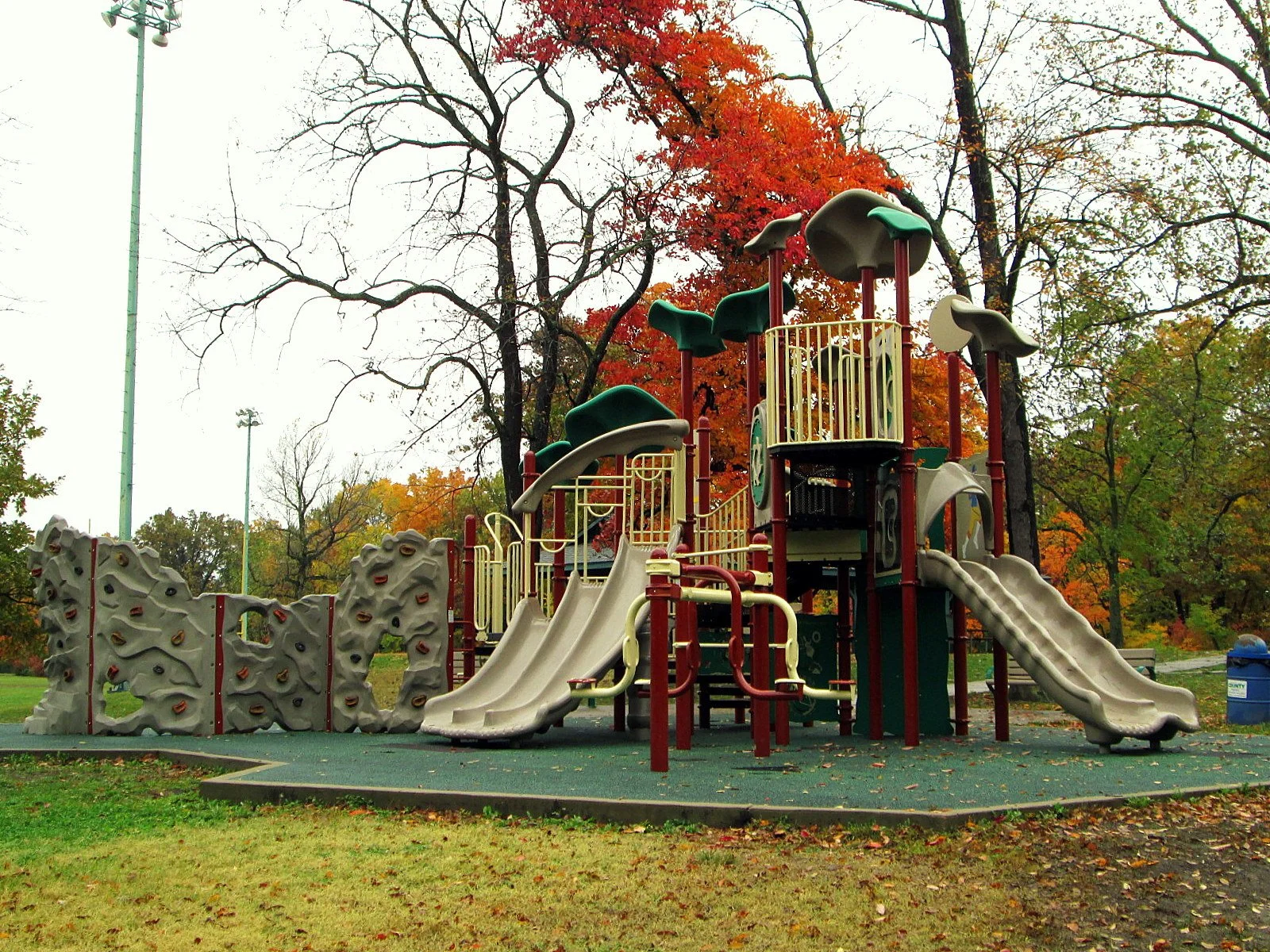
Spanish Lake Park provides playgrounds, trails, tennis courts, fishing, athletic fields, restrooms, and shelters. Larimore Park expands local recreation options with basketball courts, and a skate park which includes pump track.
The Lilac and Dunn property remains undeveloped and land‑banked, offering potential for the future. Fort Belle Fontaine Park, the first American fort west of the Mississippi River, offers 305 acres of multi‑use trails and the historic Grand Staircase, blending cultural heritage with outdoor exploration.
Opening in 2027, the St. Louis Zoo WildCare Park will add a 425‑acre conservation‑focused destination featuring safari routes, nature trails, an observation tower, educational facilities, and wildlife viewing experiences.
Influx of Paths, Trails, and Greenways Supporting Outdoor Recreation
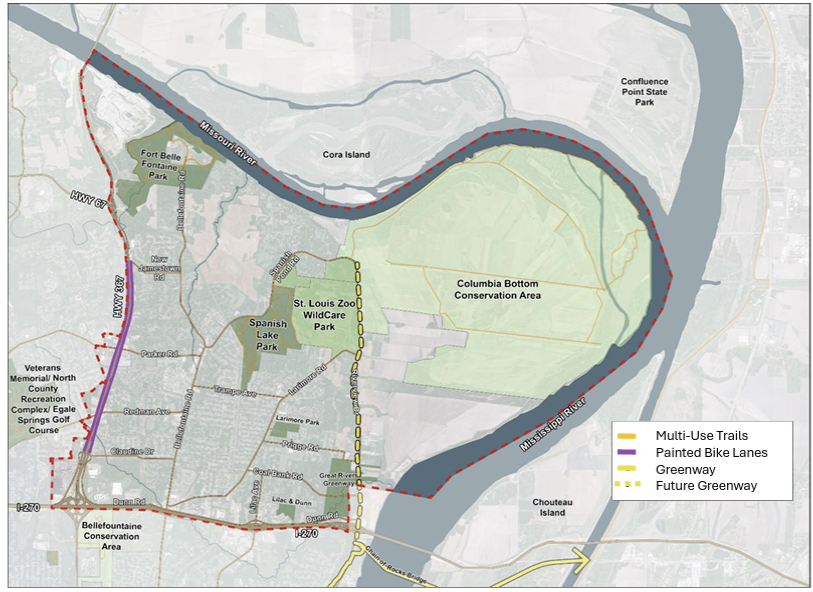
Spanish Lake’s growing system of trails, paths, and greenway connections supports walking, biking, wildlife viewing, and outdoor recreation. Multi‑use trails run throughout parks and conservation areas, and the community’s proximity to the Mississippi River creates opportunities for expanded connections to regional greenways, including the Mississippi Greenway which connects to historic destinations.
While gaps remain in sidewalks and trail linkages, the foundation for a fully connected recreational network is already established.
Rich Soil Supports Farmland
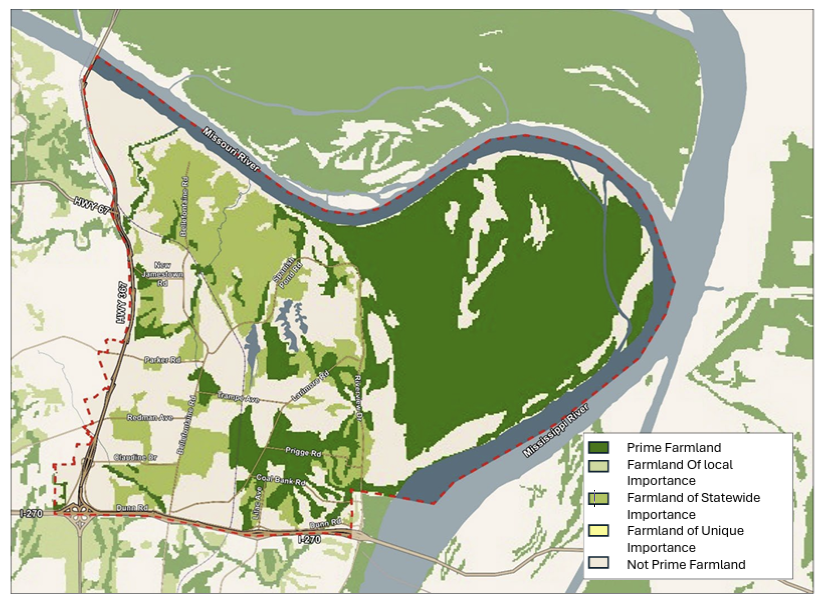
Agriculture is an important part of Spanish Lake’s landscape, supported by exceptional soils. The soil is classified to indicate its ability to produce high‑value or high‑yield crops. This helps to reinforce Spanish Lake’s role as a community where productive agricultural land, ecological systems, and suburban neighborhoods can coexist.
The strength of these soils supports local farming operations and creates opportunities for agri‑tourism and emerging agri‑community initiatives.
Conservation Efforts Boost Natural Appeal
Spanish Lake’s conservation areas play a major role in protecting habitat, supporting wildlife, and providing regional outdoor recreation.
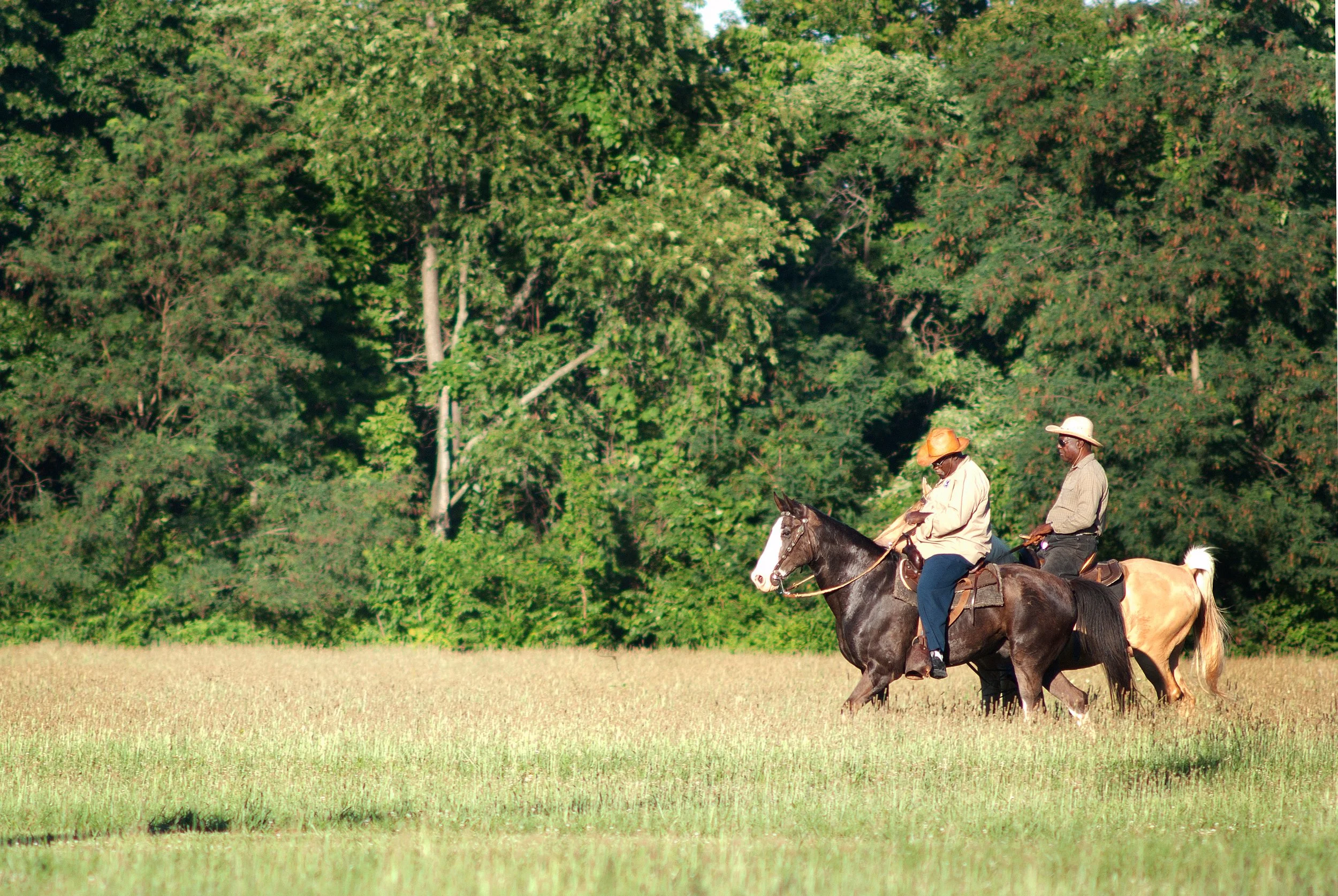
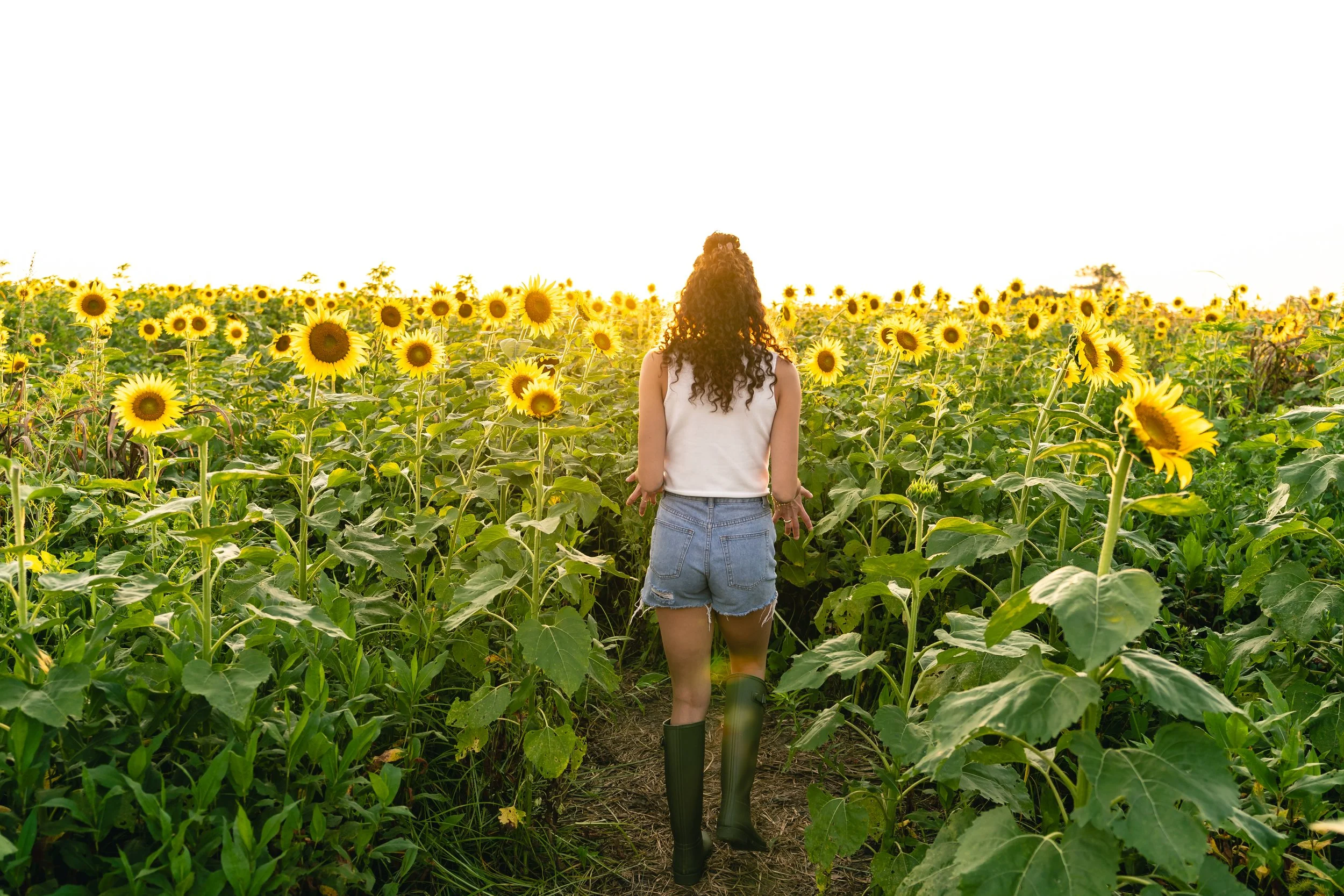
Columbia Bottom Conservation Area has managed to restore a mosaic of wetlands, bottomland forests, prairie, and cropland that support diverse wildlife and migratory species. It provides extensive opportunities for hiking, biking, horseback riding, birding, hunting, fishing, and boating, as well as seasonal sunflower fields that draw visitors from across the region.
The nearby Bellefontaine Conservation Area expands recreational opportunities and together these conservation lands anchor the ecological network at the confluence of the Mississippi and Missouri Rivers and reinforce Spanish Lake’s identity as a community deeply connected to its natural environment (Page 41).
Land Use Regulations
Diverse Land Uses
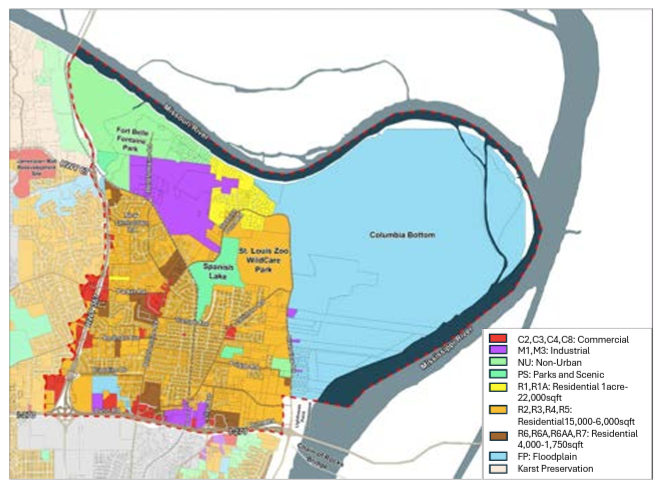
Spanish Lake’s land area includes significant parks and recreation acreage (37%), agricultural/vacant land (20%), single‑family residential (25%), and small proportions of multi‑family, commercial, and industrial land.
Floodplain and Karst Restrictions
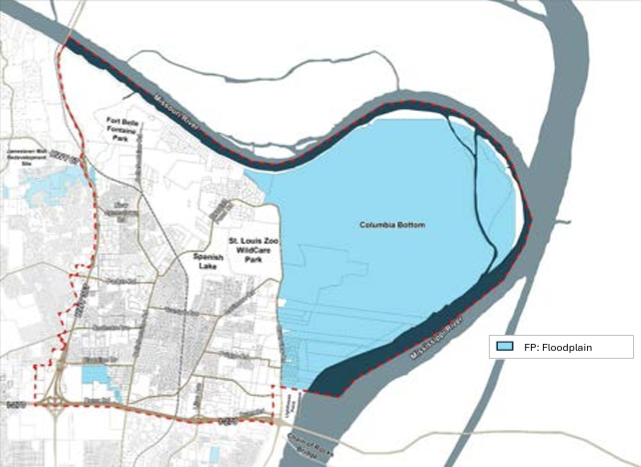
Floodplain areas add regulatory constraints to development, requiring specific building standards. Karst preservation zones limit intensity of construction due to sinkholes, underground drainage, and geological sensitivity.
Current Placetypes
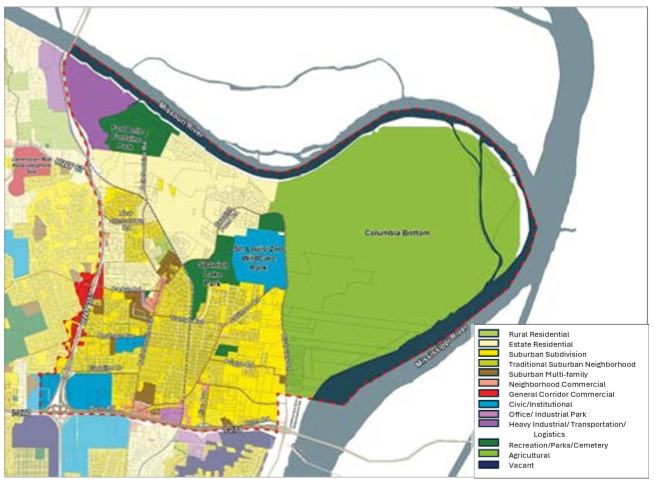
Current placetypes include rural residential, suburban subdivisions, multi‑family clusters, neighborhood commercial, general commercial corridors, civic/institutional districts, industrial parks, heavy industrial areas, and agricultural zones.
Susceptibility to Change
High Change Areas
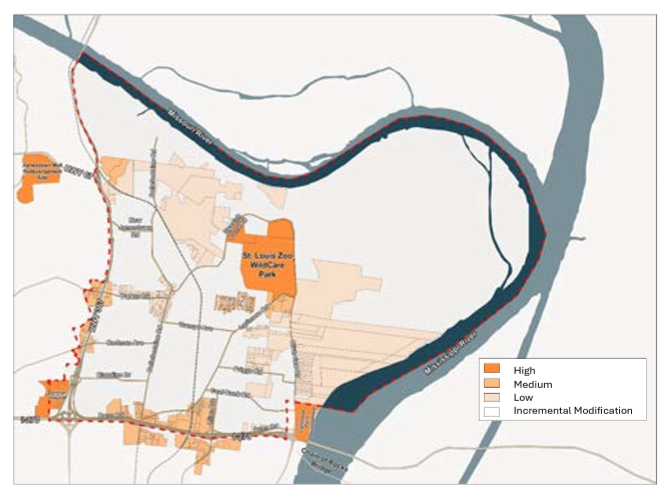
High Susceptibility to Change indicates areas that are in the process of change driven by new economic development projects and/or areas that will most likely change in response to the current economic development projects or changing local economic market conditions.
Medium Change Areas
Medium Susceptibility to Change indicates areas that have an opportunity to change based upon the new economic development projects and market conditions but would need some degree of collective facilitation, reorganization and economic incentives.
Outdoor Recreation and Tourism Potential
Spanish Lake can establish itself as a recreation gateway by expanding trail networks, linking parks, and supporting eco‑tourism, agri‑tourism, and heritage tourism anchored around the Mississippi and Missouri Rivers.
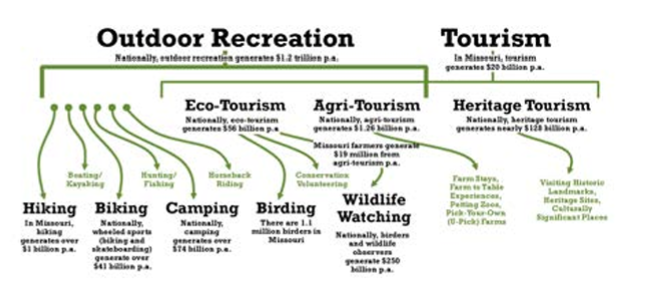
Building a Gateway Community Identity
The community is positioned to serve as a regional gateway to wildlife viewing, hiking, boating, historic sites, and emerging attractions such as WildCare Park. This identity can support new hospitality and retail opportunities.
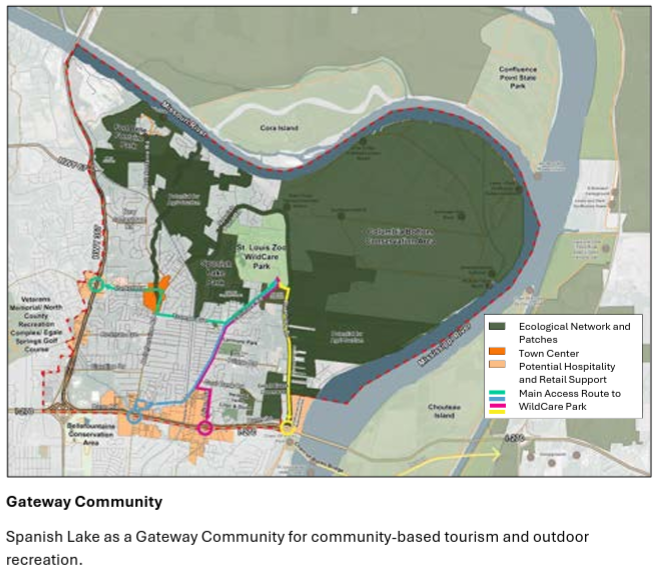
Development Opportunities
Hospitality and Retail Expansion Near Key Gateways
Prime development areas exist near I‑270 and Riverview Drive, including land for sale near the future WildCare Park entrance. These sites are well‑positioned for hospitality, dining, retail, and visitor‑support services linked to emerging tourism flows (Page 158).
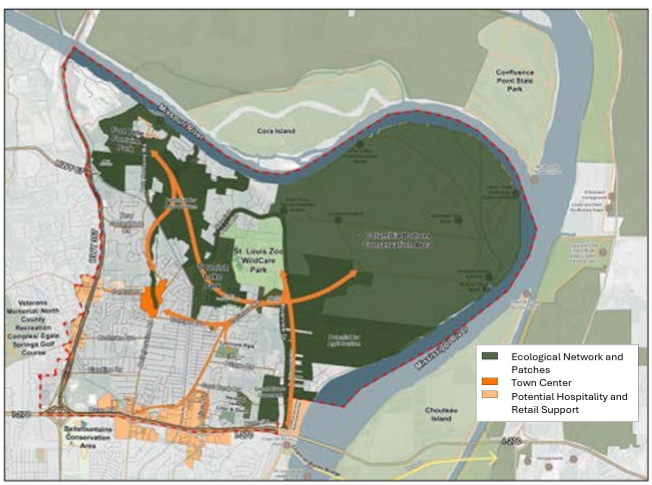
Town Center Revitalization and Activation
Bellefontaine Road and the proposed Spanish Lake Town Center offer opportunities for localized commercial and cultural development. Enhancing streetscape design, walkability, and small business space can create a community anchor while complementing tourism pathways linked to parks and ecological assets (Page 157-159).
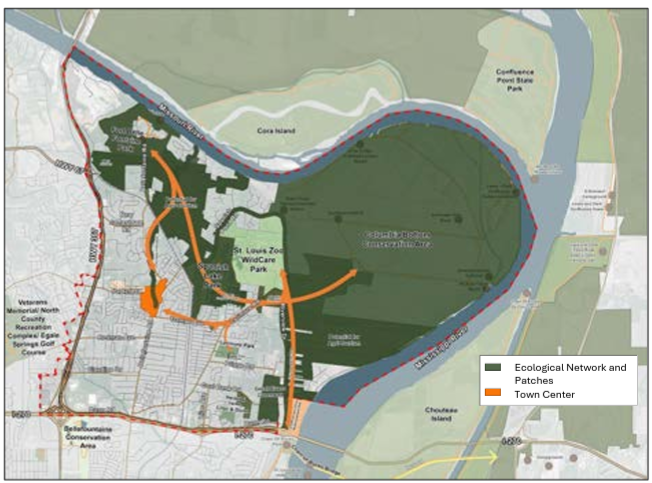
Agri-Community and Agri-Tourism Integration
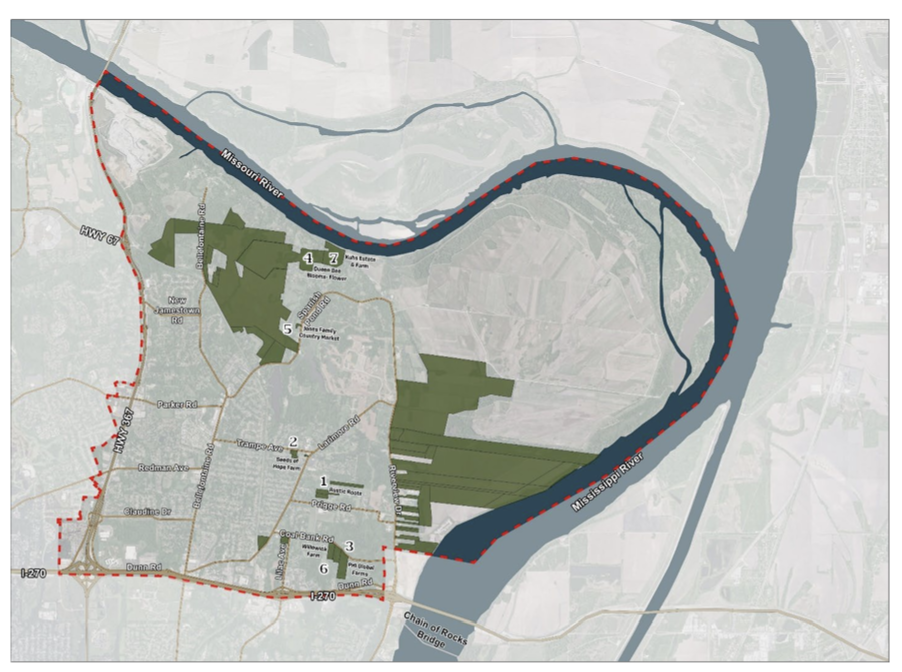
The opportunity exists for building upon the emerging community emphasize on non-profit community-based agriculture addressing the lack of healthy food and the food desert, as ell as for-profit community farms (Page 159).
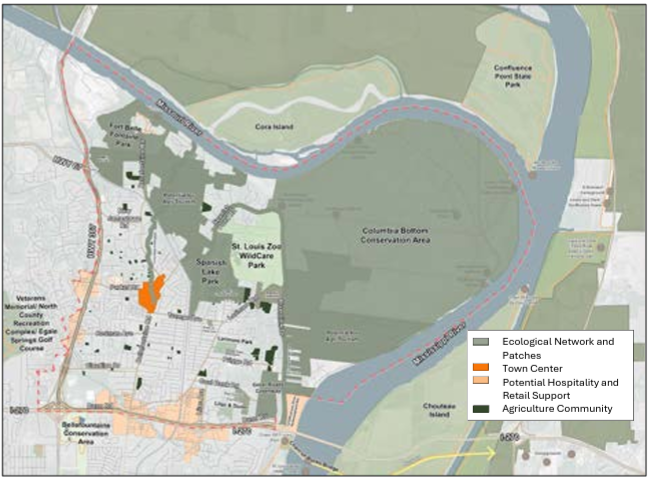
Recreation Network Anchored by Regional Eco-assets
By connecting the environmental patch with local tourism pathways, Spanish Lake could become a network for outdoor recreational use and the subsequent economic benefit for the residents and the community (Page 161).