
Housing and Community Services Recommendations
Neighborhood Transformation Area
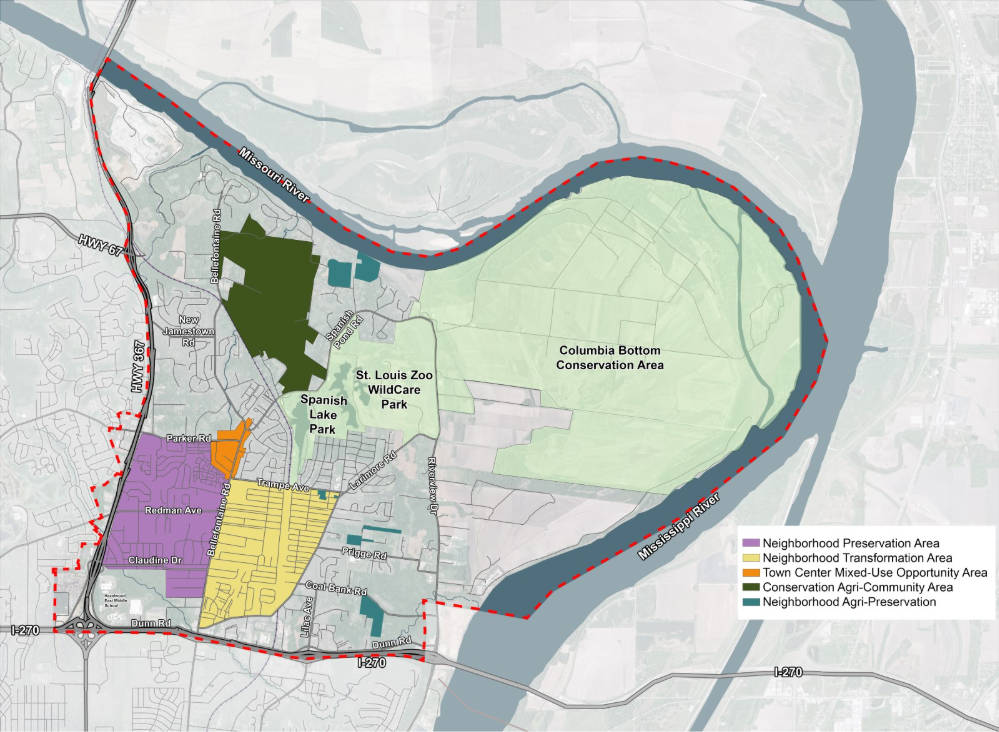
The Neighborhood Transformation Area is generally bounded by Trampe Avenue to the north, Bellefontaine Road to the west, and Larimore Road to the east and south. It serves as Spanish Lake’s highest‑priority area for coordinated neighborhood revitalization and catalytic investment.
This area is strategically important because it is the established residential neighborhood closest to WildCare Park. Larimore Road is also expected to function as a major connector for resident and visitor traffic moving between Bellefontaine Road, Riverview Drive, and Columbia Bottom Road. Focusing investment here can create an inviting residential gateway, improve neighborhood conditions, capture economic benefits associated with WildCare Park, and build confidence for broader reinvestment throughout Spanish Lake.
Primary Planning Priorities:
Acquire, rehabilitate, and return vacant and distressed homes to productive use, with an emphasis on responsible homeownership and long-term property management.
Provide targeted owner-occupied home repair, accessibility, estate-planning, title-clearing, tax, insurance, and housing-stability assistance.
Use strategic infill housing to rebuild priority blocks while respecting established neighborhood character.
Coordinate housing investment with Larimore Road improvements, traffic safety, sidewalks, lighting, landscaping, drainage, street trees, and gateway treatments.
Apply crime prevention through environmental design principles and coordinate property improvement, code enforcement, public safety, and resident stewardship.
Leverage proximity to WildCare Park to support visible public-realm improvements.
Convert persistently vacant or unbuildable lots into community gardens, urban farm plots, or CSA‑style growing sites, prioritizing parcels unsuitable for housing but ideal for productive green uses. Pair these sites with resident‑led stewardship, shared tools and water infrastructure, and partnerships with local growers or nonprofits to support CSA subscriptions or neighborhood farm stands. Where appropriate, these uses should also strengthen healthy food access, youth education, and small‑scale resident entrepreneurship.
Desired Outcome
Over time, the Neighborhood Transformation Area should become a stable, attractive, and well-connected residential gateway to WildCare Park demonstrating how coordinated investments in housing, infrastructure, public-safety, and community-service can produce visible neighborhood change.
Community and urban agriculture persistently vacant and hard-to-redevelop lots will further stabilize the area by transforming liabilities into well tended community assets, deterring blight, and giving residents a visible stake in the neighborhood's improvement as broader housing and infrastructure investments take hold.
Neighborhood Preservation Area
The Neighborhood Preservation Area is generally bounded by Parker Road to the north, Muriel Drive to the south, Bellefontaine Road to the east, and Missouri Route 367 to the west. Its purpose is to protect and strengthen an established residential market before isolated vacancy, deferred maintenance, or shifting ownership patterns develop into broader neighborhood challenges.
Unlike the Neighborhood Transformation Area, this geography emphasizes preventive action rather than large-scale redevelopment. Its location between Bellefontaine Road and Route 367 provides convenient proximity to jobs, shopping, schools, parks, and regional destinations. Timely preservation efforts can help retain long-time residents, sustain owner occupancy, protect attainable homeownership opportunities, and maintain neighborhood confidence.
Primary Planning Priorities:
Prioritize owner-occupied home repair, weatherization, energy efficiency, accessibility improvements, and aging-in-place assistance.
Provide foreclosure prevention, property-tax assistance, estate planning, title clearing, insurance counseling, and other resident-retention services.
Monitor early signs of vacancy, tax delinquency, absentee ownership, and property deterioration and intervene before conditions worsen.
Rehabilitate and responsibly resell isolated vacant homes, with preference for owner occupants and mission-oriented ownership models.
Coordinate code enforcement with grants, financing, technical assistance, and reasonable compliance periods.
Improve sidewalks, drainage, lighting, tree canopy, neighborhood entrances, traffic safety, and connections to nearby services.
Limit new development primarily to context-sensitive infill, accessible homes, accessory dwelling units, and appropriately located small-scale Missing Middle housing.
Convert isolated vacant lots into community gardens, small-scale urban farm plots, or CSA-model growing sites as an interim or permanent use where a lot is not well-suited to infill housing, prioritizing sites that improve appearance and prevent nuisance conditions while giving residents a productive stake in their upkeep; support these efforts through resident-led stewardship agreements, shared water and tool access, and partnerships with local growers, faith institutions, or nonprofits to operate CSA subscriptions or neighborhood farm stands that improve food access for existing residents.
Desired Outcome
The Neighborhood Preservation Area should remain a stable residential anchor with strong owner occupancy, well-maintained housing, attainable homeownership opportunities, and a high quality of life for current and future residents. Community and urban agriculture on isolated vacant lots can support this goal by turning otherwise idle parcels into productive, well-tended community assets, preventing early signs of decline and strengthening resident engagement and food access before vacancy or disinvestment can take hold. Abandoned, tax delinquent properties are prime candidates for productive reutilization through a County land bank program.
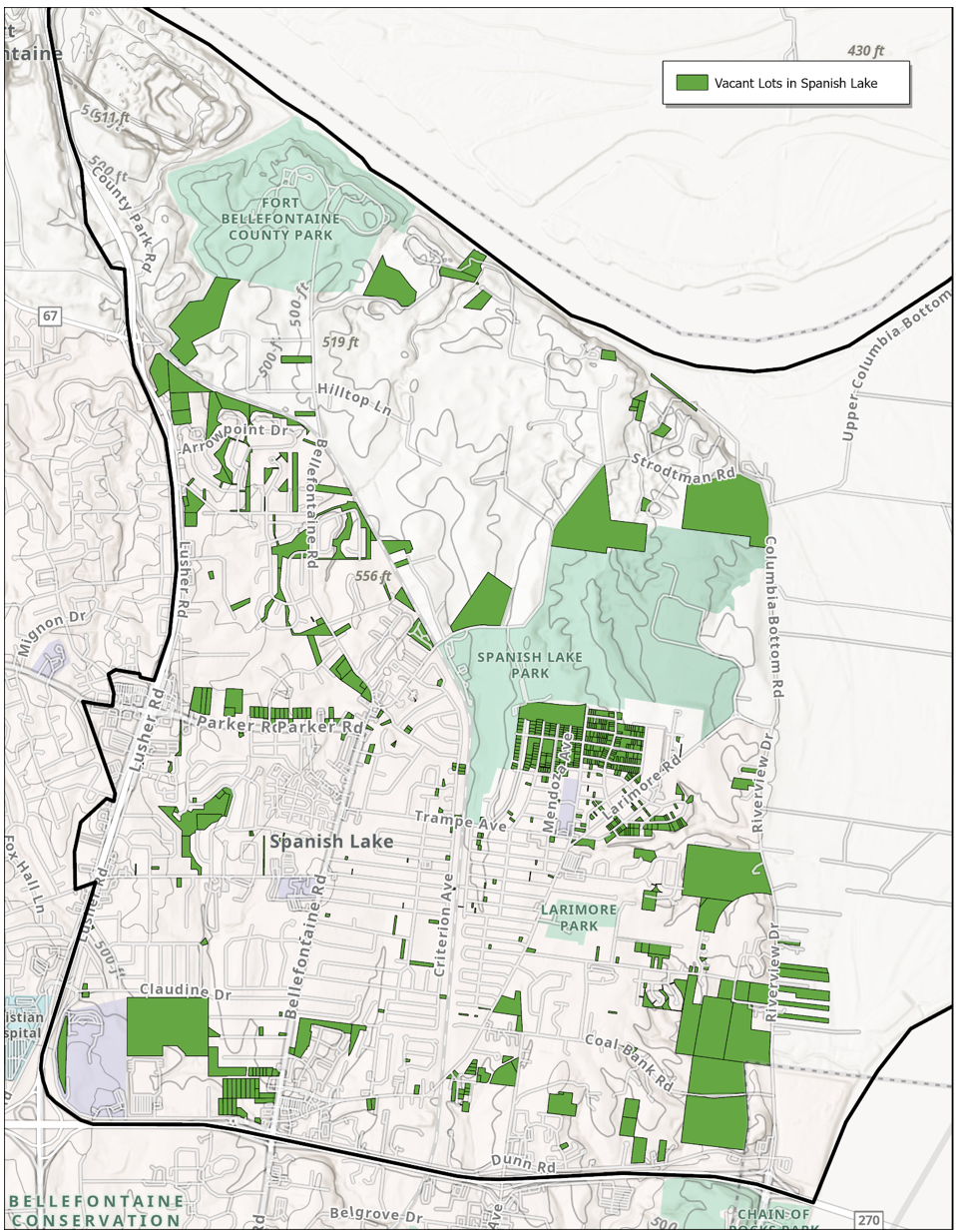
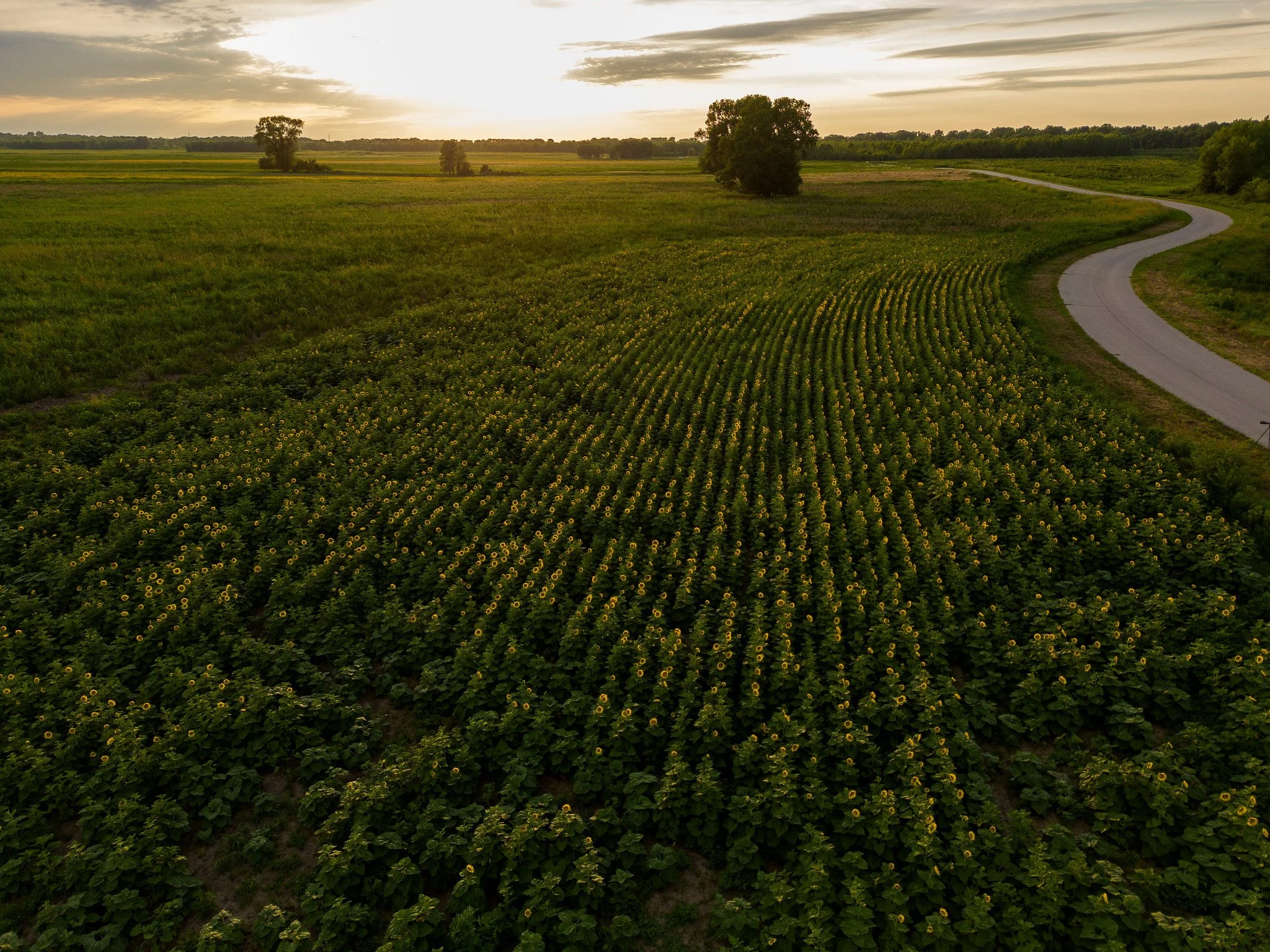
The Conservation Agri-Community includes undeveloped and agricultural land located between Fort Belle Fontaine, the Missouri River, WildCare Park, and Spanish Lake Park. This area should be evaluated for carefully planned market-rate single-family development that expands Spanish Lake's housing choices while protecting its natural, cultural, and recreational assets.
The development concept should emphasize lower-intensity, conservation-oriented residential growth rather than conventional high-density subdivision patterns. Larger homesites, clustered development where appropriate, preserved open space, and environmentally responsive site planning can create a distinctive market position for households seeking access to nature and more sustainable living. Rezoning should occur only after infrastructure, environmental, floodplain, habitat, transportation, and fiscal impacts are evaluated.
Conservation Agri-Community
Primary Planning Priorities:
Protect wetlands, streams, floodplain features, woodlands, habitat, cultural resources, scenic views, and natural drainage patterns.
Use conservation subdivision principles, larger lots, clustered homes where appropriate, and permanent open-space preservation to reduce land disturbance and impervious coverage.
Require connected trails, native landscaping, tree preservation, green infrastructure, and low-impact stormwater management.
Encourage high-performance, energy-efficient, solar-ready homes built with durable, low-impact, recycled, or responsibly sourced materials.
Provide electric-vehicle charging readiness, water-efficient fixtures and landscaping, healthy indoor materials, and practical solar energy usage.
Attract middle- and upper-middle-income homeowners seeking environmentally conscious housing, outdoor recreation, and proximity to regional natural and cultural destinations.
Extend utilities and road improvements only where they are fiscally responsible and consistent with environmental protection and long-term land-use goals.
Desired Outcome
The Conservation Agri-Community should become a distinctive conservation-oriented neighborhood that attracts new market-rate households, expands the tax base, and demonstrates how housing growth can be integrated with environmental stewardship and the Gateway Agri-Community's natural asset strategy.
Regulatory Framework and Housing Wealth and Reinvestment Strategies
Implementation of the Housing and Community Services Program will require targeted updates to St. Louis County's zoning, subdivision, development, property-maintenance, and related regulatory tools. These updates should not apply uniformly across Spanish Lake. Instead, regulatory changes should reinforce the distinct purpose and development character established for each of the four geographic investment areas.
The objective is not to broadly increase residential density throughout Spanish Lake. Rather, zoning and regulatory changes should allow the right housing types in the right locations: preserving established single-family neighborhoods; enabling context-sensitive infill and Missing Middle housing in targeted locations; supporting mixed-use and higher-intensity development within the Town Center; and accommodating carefully planned residential growth while protecting environmental resources in the Conservation Agri-Community.
Housing reinvestment should increase the value of Spanish Lake as a place to live while helping existing residents remain in the community and participate in the wealth created by neighborhood improvement. Implementation should combine property-value growth, rehabilitation, homeownership, affordability, aging in place, and anti-displacement tools rather than treating these objectives separately.
The following strategies are recommended as an implementation framework. Specific eligibility thresholds, incentive amounts, property tax abatement terms, and regulatory requirements should be established through St. Louis County legal, fiscal, market, and program analysis.
Geographic Area
Neighborhood Transformation Area: Trampe Avenue / Bellefontaine Road / Larimore Road
Priority Zoning and Regulatory Actions
Permit flexible lot dimensions and lot consolidation where needed.
Establish context-sensitive infill design standards
Permit Missing Middle housing at appropriate nodes
Permit community gardens, urban farms, and CSA-model growing operations on vacant and hard to redevelop lots.
Geographic Area
Neighborhood Preservation Area: Parker Road / Muriel Drive / Bellefontaine Road / Route 367
Priority Zoning and Regulatory Actions
Maintain predominantly single-family zoning character.
Permit Accessory Dwelling Units (ADUs) with clear design and occupancy standards.
Allow small-scale Missing Middle housing only at appropriate nodes.
Review nonconforming lot, setback, and dimensional standards to facilitate compatible replacement housing and infill.
Permit community gardens and small-scale urban farm or Community Supported Agriculture (CSA) use on isolated vacant lots, with standard addressing appearance, accessory structures, and compatibility with adjacent homes.
Geographic Area
Town Center Mixed-Use Opportunity Area
Priority Zoning and Regulatory Actions
Create a mixed-use district overlay to support development of the Spanish Lake Town Center
Permit apartments, townhomes, live-work units, upper-story housing, retail, restaurants, healthcare, offices, civic uses, and community services.
Use form-oriented standards and pedestrian-oriented building placement.
Reduce parking minimums and allow for shared parking.
Encourage active street frontages and coordinated site access.
Permit temporary and long-term community agriculture, market gardens and CSA operations on not yet developed parcels and within public gathering spaces, with a clear pathway for transition to planned end uses as development phases in.
Geographic Area
Conservation Agri-Community: Fort Belle Fontaine / Missouri River / WildCare Park / Spanish Lake Park
Priority Zoning and Regulatory Actions
Establish conservation zoning inclusive of residential density, uses, environmental protections, and development parameters.
Permit clustered development where appropriate in exchange for permanent open-space preservation.
Strengthen environmental and stormwater standards.
Require infrastructure, fiscal, transportation, environmental, floodplain, and habitat analysis before major rezoning or residential entitlement.
Explicitly permit community agriculture, urban farms, and CSA operations as a core conforming use consistent with the area’s agri-community and conservation character.
Implementation Tools
Home Repair and Resident Retention
Recommended Direction
Prioritize home repair for seniors, residents with disabilities, lower-and moderate-income households and long-time homeowners, including consideration of priority for residents who have occupied their homes for 15+ years.
Priority Geography
Neighborhood Preservation Area and Neighborhood Transformation Area
Potential Partners and Resources
St. Louis County Office of Community Development; County Health and Human Services Department; lead Spanish Lake community economic development implementation entity; Rebuilding Together; Community Action Agency of St. Louis County, Inc. (CAASTLC); utility/weatherization programs; philanthropic and home-repair partners.
Rehabilitation and Property-Value Growth
Recommended Direction
Evaluate a targeted 3-or 5-year partial property tax abatement for qualifying substantial rehabilitation of owner-occupied and responsible rental housing. Tie eligibility to a documented rehabilitation threshold.
Require code compliance, responsible management, and affordability commitments when public subsidy is used.
Priority Geography
Transformation Area first, with selected distressed properties elsewhere.
Potential Partners and Resources
St. Louis County Assessor; St. Louis County Department of Revenue; County Council; St. Louis County Office of Community Development; St. Louis County Port Authority; lead Spanish Lake community development implementation entity.
Homeownership and Household Wealth
Recommended Direction
Expand down-payment support, homebuyer education, credit building, affordable financing, counseling, and related buyer-readiness services.
Develop an employer-assisted housing initiative with Christian Hospital/BJC and other major North County employers.
Priority Geography
Transformation Area first, with selected distressed properties elsewhere.
Potential Partners and Resources
St. Louis County Assessor; St. Louis County Department of Revenue; County Council; St. Louis County Office of Community Development; St. Louis County Port Authority; lead Spanish Lake community development implementation entity.
Housing Adaptation Accessory Dwelling Units (ADUs) and Attainability
Recommended Direction
Address aging and functionally obsolete housing through rehabilitation, modernization, accessibility improvements, and strategic replacement where rehabilitation is no longer feasible.
Pair streamlined ADU regulations with technical assistance, prototype architectural plans, and grants or low-cost financing where feasible.
Support appropriately located Missing Middle and modern infill housing to expand smaller, accessible, energy-efficient, and potentially lower-cost housing choices that better meet current and future household needs.
Priority Geography
Neighborhood Preservation Area with Missing Middle focused at appropriate nodes.
Potential Partners and Resources
St. Louis County Planning Department; St. Louis County Public Works; architects; residential building contractors; lenders/CDFIs; CAASTLC; aging-service and energy partners.
Vacant Home Recovery and Affordable Housing
Recommended Direction
Acquire or facilitate rehabilitation of vacant, tax-delinquent, distressed, and underutilized properties for owner-occupant resale, responsible rental reuse, shared-equity ownership, side-lot transfer, or redevelopment.
Combine preservation with targeted affordable/workforce housing and require clear public benefits when County funds, land, infrastructure, or incentives materially support development.
Priority Geography
Neighborhood Transformation Area first; isolated vacancies in Neighborhood Preservation Area; workforce and mixed-income rental production concentrated in Town Center.
Potential Partners and Resources
St. Louis County; lead CDC/implementation entity; Legal Services of Eastern Missouri; St. Louis Vacancy Collaborative; Land Clearance for Redevelopment Authority (LCRA) of St. Louis County; St. Louis County Port Authority; mission-oriented developers including Rise Community Development; CDFIs; HOME/CDBG; LIHTC.
Vacant-Lot Stewardship and Interim Productive Use
Recommended Direction
Evaluate a temporary property-tax abatement, reduction, or comparable incentive, where legally authorized, for vacant residential parcels maintained to established standards and placed into approved community gardens, community and urban agriculture, CSA production, green-space stewardship, or other productive interim uses.
Require activate maintenance, nuisance prevention, compliance with County standards, and a stewardship or use agreement that preserves the County’s ability to transition strategically located parcels to housing or other plan-consistent development when market conditions support redevelopment.
Priority Geography
Neighborhood Transformation Area first; isolated vacant lots in the Neighborhood Preservation Area and Town Center where near-term infill is not feasible.
Potential Partners and Resources
St. Louis County Assessor; St. Louis County Department of Revenue; St. Louis County Planning Department; St. Louis County Office of Community Development; County Council; LCRA; lead Spanish Lake development implementation entity; community agriculture operators, local growers, and nonprofit stewardship partners.